You So Black…

You So Black…
On the Long History of Anti-Black Humor
M. Abduh
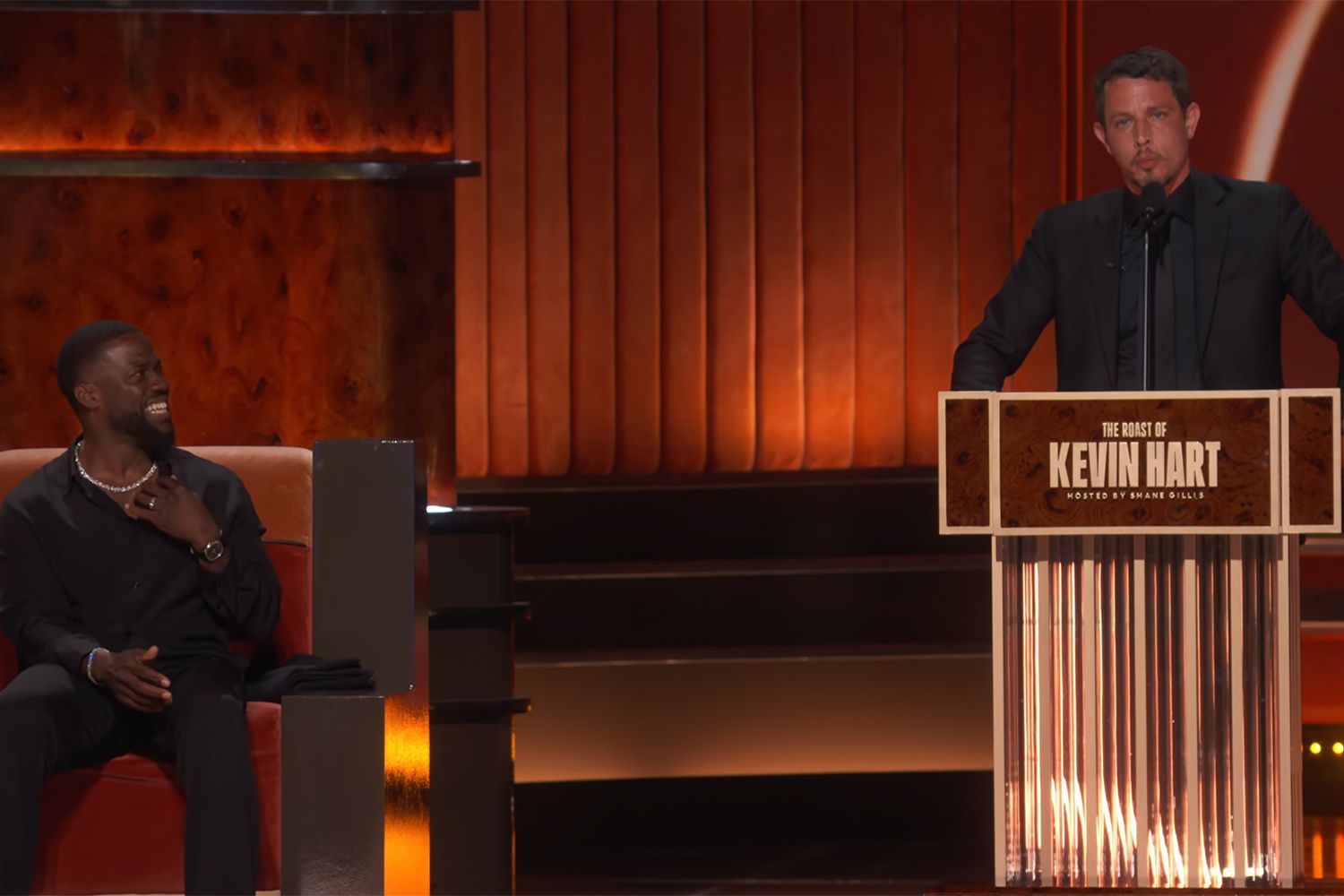
We used to snap on each other in the lunchroom. “You so black,” I said to my friend Jay, “when God made you, He said, ‘Let there be light.’” The whole table erupted. Jay came right back: “Your momma so big & black, she thinks the Aunt Jemima box is a mirror.” He got me & my mother. Those “you so black” jokes hit hardest, got the biggest laughs. Watching the Kevin Hart roast on Netflix reminded me of the lunchroom & the ugly origins of such humor.

     Hart’s lineup of white writers & comedians joked about hanging the five-foot-five roastee from a bonsai tree, about his ancestors coming to America on a slave ship in a bottle, about George Floyd “looking up at us, laughing so hard he can’t breathe.” One of them hit comedian Sheryl Underwood with a “you so black” joke, saying she received a daytime Emmy award because they couldn’t see her at night. We might have told that one in the lunchroom. That’s because these jokes come from the same history, from the same lie. A lie that says Blackness is lesser, that darker is uglier.

      Novelist Toni Morrison spoke to this while recounting what inspired her to write her novel The Bluest Eye. As children, her & a friend were walking home & talking about God. Morrison’s friend said she did not believe in Him. When Morrison asked her why, she said because “I have been asking God for blue eyes for two years, & He never gave me any.” Morrison remembered turning around & looking at her. “She was very very black, & she was very very very beautiful.” Morrison went on to say that this kind of racism hurts: “This is not lynchings & murders & drownings. This is interior pain.” Sometimes that pain appears in sorrow. Sometimes in laughter. But the wound is one. Anyone mocked for dark skin or “nappy” hair knows what Morrison means. Still, defenders of these jokes often respond the same way. They insist the problem is not the joke but those offended by it. Philosopher Judith Butler would disagree. As Claudia Rankine notes, Butler argues that words hurt because human beings are “addressable.” We cannot help being affected by what others say. The same openness that lets us receive love also leaves us vulnerable to injury.    

     Yet after receiving criticism for the roast’s racist jokes, Hart posted a video saying the comics “got the assignment.” How did insulting Blackness (or mocking slavery or lynching) become part of the assignment? More importantly, who assigned it? Did it come down on stone tablets from the mountain? Some, like Hart, believe that comedians should be able to say anything in the name of humor, that their jokes are as unquestionable as Scripture.

   This ignores centuries of dehumanizing art, literature, & entertainment. It means blackface, minstrelsy, & Black caricatures in advertisements, cartoons, film, & television were part of the assignment. It means those who mailed postcards of charred Black bodies hanging from trees, sometimes joking, “wish you made it to the barbecue last night,” got the assignment, too. Maybe this is what some people mean when they long for a time when society wasn’t so sensitive.
Too Much His: Richard Pryor, Paul Mooney, & the Question of Authorship

Too Much His: Richard Pryor, Paul Mooney, & the Question of Authorship
By M. Abduh
29 December 2025

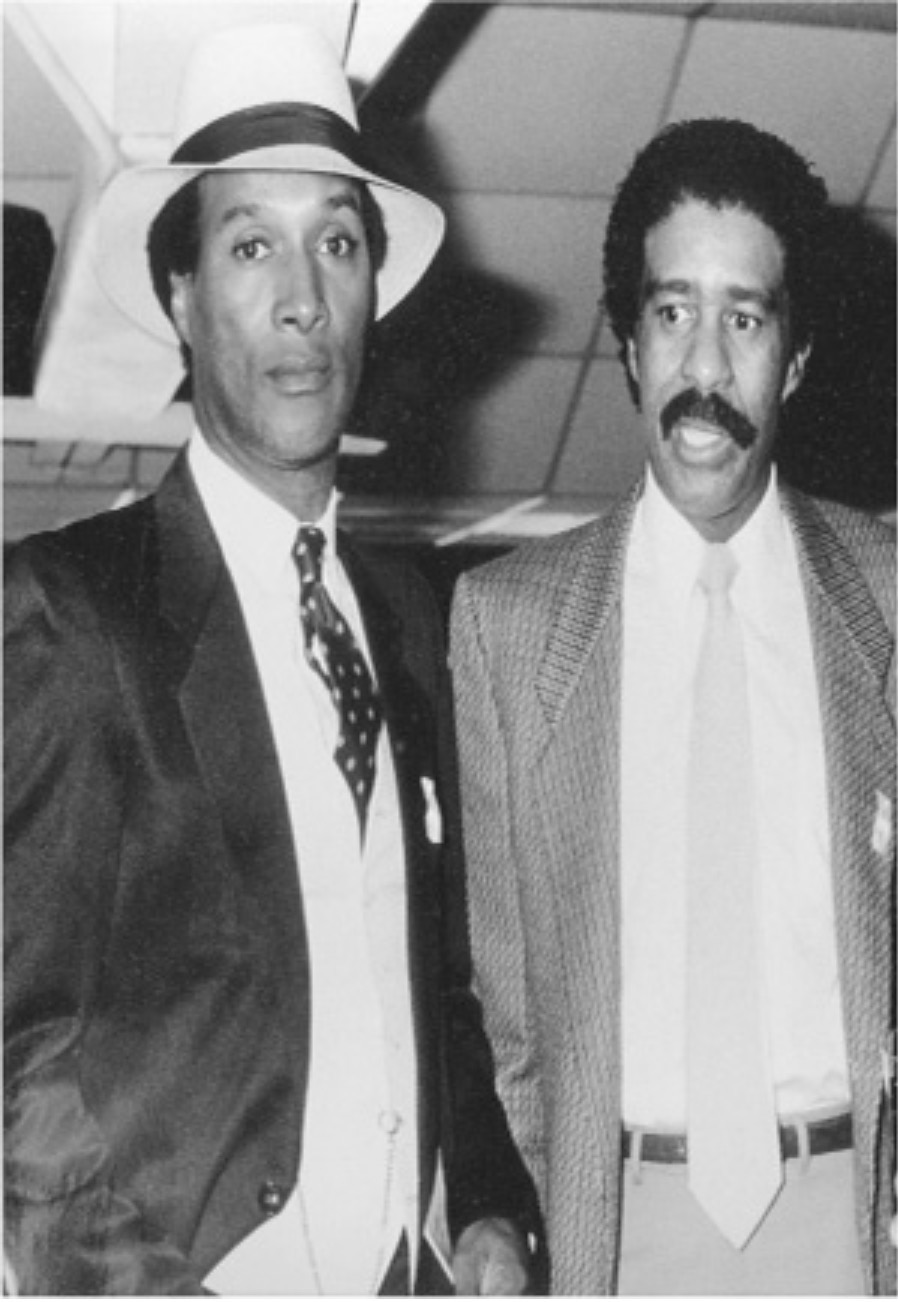
Paul Mooney deserves credit for many things. He wrote for The Richard Pryor Show on NBC and served as showrunner. He wrote for Pryor’s 1975 appearance on Saturday Night Live, at Pryor’s insistence, contributing the famous job interview sketch with Chevy Chase. He co-wrote two episodes of Sanford and Son & collaborated on Pryor’s film Jo Jo Dancer, Your Life Is Calling. What he did not write was Richard Pryor’s stand-up.

Pryor was writing & performing his stand-up long before he met Mooney. Biographer Scott Saul mentioned that in 1965, Pryor was “writing new material constantly” for near-weekly appearances on Merv Griffin. By the time Pryor & Mooney worked together, his voice was already evolving. In his memoir Black Is the New White, Mooney recalled that Pryor shed his Cosby-like act alone in Berkeley, California while listening to Marvin Gaye’s “What’s Going On” on repeat & reading Malcolm X. He described watching Pryor’s new direction as an audience member, marveling as he moved from simple set-ups & punchlines to storytelling, inhabiting characters drawn from his childhood in a brothel in Peoria, Illinois. 

A track on the album Is It Something I Said? titled “Just Us” is telling. Pryor credited Mooney as a co-writer, even though he only gave him one line: “You go down [to the courthouse] looking for justice. That’s what you find, just us.” Mooney himself said he did not write the routine. He said the line in passing, & Pryor used it, honest enough to credit him for it. That is the only place Mooney’s name appears.

The “just us/justice” pun predates Mooney. It circulated in Black Arts–era writing & appears on the 1972 Last Poets record “E Pluribus Unum”: “They also represent the Just-Us / which you & I know is blind.” Poet Claudia Rankine would later use Pryor’s version as the epigraph to her 2021 collection Just Us. This is how language gets passed around & passed down.

Having an ear for a line isn’t unique to Pryor. In Gabriel García Márquez’s short story “Sleeping Beauty and the Airplane,” the narrator asks an airport clerk if she believes in love at first sight. “Of course,” she says. “The other kinds are impossible.” It later emerged that García Márquez had heard that line years earlier from a woman named Silvana de Faria at Charles de Gaulle Airport in Paris. After his death, she recalled the exchange:

“Then he asked why I was living in Paris. I said, ‘We Latin Americans can only live in France when we fall in love.’

‘In love with France?’

I said, ‘No, love at first sight. I believe that’s the only kind of love.’

This is what he writes in the story! He sucked my words. When I read that, I felt goose bumps. You are not original. You are like all bloody writers. You are a vampire.”

I suppose this makes her García Márquez’s writer.

Mike Epps said it plainly: “Regular people write for me all the time, that don’t even know they’re writing for me. Motherfucker sitting at the bar & say some shit. I say, ‘I got to have that. I’m taking that.'”

Mooney described Pryor as a master of improvisation. Watching him work on stage, he said, was like seeing a high-wire act without a net:

When Richard gets up onstage at Maverick’s, he never knows what he’s going to say. The words just spill out. I’ve done enough improv to know how tough it is to do what Richard’s doing. Just a man and a microphone, saying whatever’s on his mind at that moment, developing it on the spot into a routine. It’s the purest kind of improvisation, and Richard proves himself brilliant at it. Every night is different.

This is not someone reciting another person’s jokes.

Others who watched Pryor work describe a similar process. Comic George Wallace witnessed him create Live on the Sunset Strip in small comedy clubs over several weeks. According to Wallace, Pryor went onstage with nothing, with “less than zero,” riffing for an hour each night, struggling to find his way. Wallace saw the bits sharpen week by week until, “Holy shit!,” he said, Pryor finally gathered the material that would become one of his greatest performances.

No artist works in a silo. Comedians like Pryor, Mooney, Murphy, Chappelle, and others collaborate with peers. They punch up jokes, offer ideas, throw out lines. For example, people often claim that Keenen Ivory Wayans co-wrote Eddie Murphy’s Raw. The credits tell a different story:

Written by Eddie Murphy
Opening sketch: Eddie Murphy & Keenen Ivory Wayans

As for Pryor & Mooney’s collaboration on sketches & scripts, Mooney said they hired a stenographer and met at Richard’s house. They tossed around situations, one-liners, trying to crack each other up. The stenographer couldn’t keep up. If she laughed, they knew they had something.

Those who were there, including Pryor’s bodyguard Rashon Khan, have rejected the claim that Mooney was Pryor’s writer. Khan stated,

The stand up performer writes his own material… Paul Mooney was not Richard’s writer. Paul Mooney like anybody that’s a friend would see what you was doing, & they would give you three or four or five other alternatives… It still was up to you. You created the base… They wasn’t writing for him. It wasn’t notes written down.

Pryor was a prolific writer for himself & others. He wrote for the Flip Wilson Show, Sanford and Son, The Lily Tomlin Show, &, perhaps most famously, he co-wrote the classic film Blazing Saddles with Mel Brooks. Mooney said, “Mel Brooks knows his comedy. He’s smart enough to know who is the funniest man on the planet. He hires Richard.”

Mooney himself said that “Richard is never worried about anyone raiding his material. It’s too much his.” 

No one else’s. 

Paul Mooney was Richard Pryor’s friend, sounding board, & collaborator. He was not his writer.