You So Black…
On the Long History of Anti-Black Humor
M. Abduh
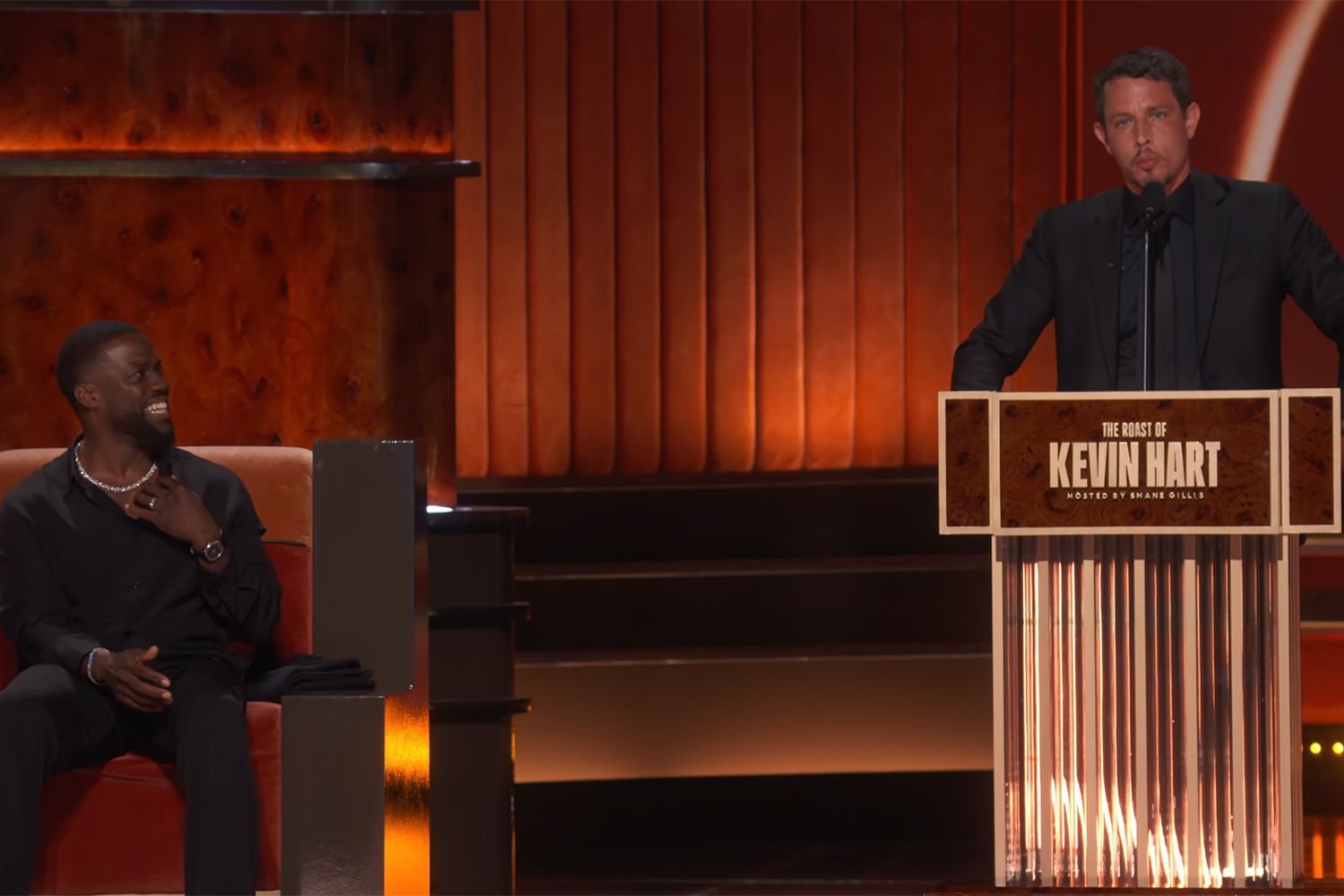
We used to snap on each other in the lunchroom. “You so black,” I said to my friend Jay, “when God made you, He said, ‘Let there be light.’” The whole table erupted. Jay came right back: “Your momma so big & black, she thinks the Aunt Jemima box is a mirror.” He got me & my mother. Those “you so black” jokes hit hardest, got the biggest laughs. Watching the Kevin Hart roast on Netflix reminded me of the lunchroom & the ugly origins of such humor.
Hart’s lineup of white writers & comedians joked about hanging the five-foot-five roastee from a bonsai tree, about his ancestors coming to America on a slave ship in a bottle, about George Floyd “looking up at us, laughing so hard he can’t breathe.” One of them hit comedian Sheryl Underwood with a “you so black” joke, saying she received a daytime Emmy award because they couldn’t see her at night. We might have told that one in the lunchroom. That’s because these jokes come from the same history, from the same lie. A lie that says Blackness is lesser, that darker is uglier.
Novelist Toni Morrison spoke to this while recounting what inspired her to write her novel The Bluest Eye. As children, her & a friend were walking home & talking about God. Morrison’s friend said she did not believe in Him. When Morrison asked her why, she said because “I have been asking God for blue eyes for two years, & He never gave me any.” Morrison remembered turning around & looking at her. “She was very very black, & she was very very very beautiful.” Morrison went on to say that this kind of racism hurts: “This is not lynchings & murders & drownings. This is interior pain.” Sometimes that pain appears in sorrow. Sometimes in laughter. But the wound is one. Anyone mocked for dark skin or “nappy” hair knows what Morrison means. Still, defenders of these jokes often respond the same way. They insist the problem is not the joke but those offended by it. Philosopher Judith Butler would disagree. As Claudia Rankine notes, Butler argues that words hurt because human beings are “addressable.” We cannot help being affected by what others say. The same openness that lets us receive love also leaves us vulnerable to injury.
Yet after receiving criticism for the roast’s racist jokes, Hart posted a video saying the comics “got the assignment.” How did insulting Blackness (or mocking slavery or lynching) become part of the assignment? More importantly, who assigned it? Did it come down on stone tablets from the mountain? Some, like Hart, believe that comedians should be able to say anything in the name of humor, that their jokes are as unquestionable as Scripture.
This ignores centuries of dehumanizing art, literature, & entertainment. It means blackface, minstrelsy, & Black caricatures in advertisements, cartoons, film, & television were part of the assignment. It means those who mailed postcards of charred Black bodies hanging from trees, sometimes joking, “wish you made it to the barbecue last night,” got the assignment, too. Maybe this is what some people mean when they long for a time when society wasn’t so sensitive.