Disappearing Acts

Disappearing Acts
By M. Abduh

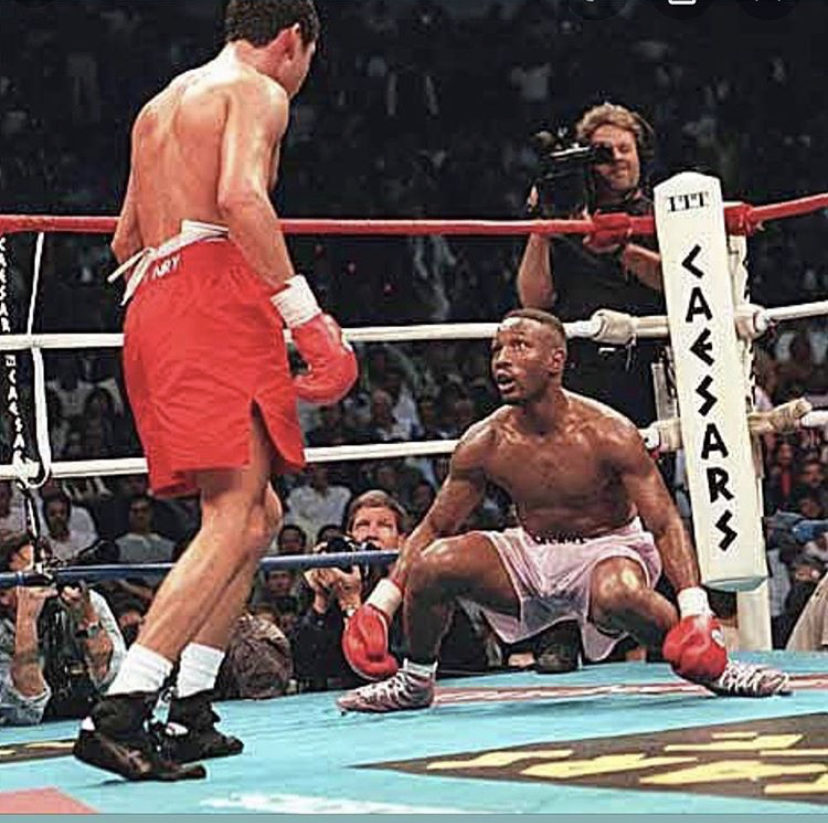
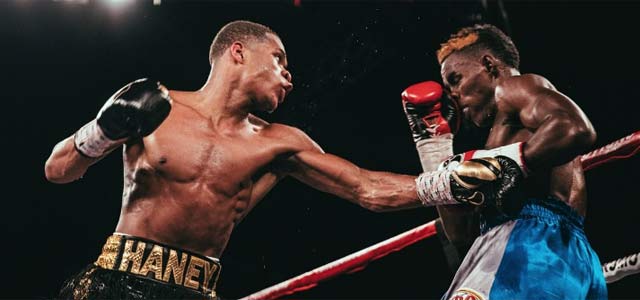
He ducked so low under the punch, he was looking up at his opponent from ringside.

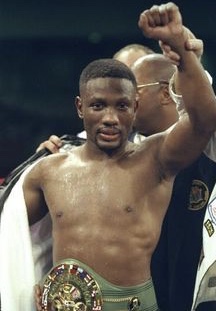
In the mid to late eighties, I was what one would call a pure fight fan and something of an amateur boxer. I had recorded and studied hundreds of fights on VHS tapes stacked all over my room. Many of them featured fighters from the 1984 U.S. Olympic Boxing team: Mark Breland, Evander Holyfield, Meldrick Taylor, Tyrell Biggs, and Pernell “Sweet Pea” Whitaker. Pernell Whitaker, especially. I watched as he won a gold medal in the lightweight division, beating Luis Ortiz of Puerto Rico. (One of nine gold medals the team would bring home. Holyfield had to settle for a bronze medal, after being robbed by the referee).

As a pro, Whitaker would go on to win titles in four different divisions: lightweight, light welterweight, welterweight, and light middleweight and defended the undisputed lightweight crown more times than anyone in history, with six title defenses. A master boxer, his defense was aptly described as a “disappearing act.” Even in his loss to Oscar De La Hoya, I can remember Pernell dropping his guard as De La Hoya’s swung at the air around Sweet Pea’s head and shoulders. After missing widely and repeatedly in the second round, De La Hoya had to stop and smile. My father, who had seen all the Sugars—Sugar Ray Robinson, Sugar Ray Seales, Sugar Ray Leonard—jumped up from his seat like he was at a Sunday morning revival and said, “Goddamn he’s sweet!”

“If you talked to real boxing heads [and asked], ‘Who would have beaten Floyd Mayweather?’ Well, if they were both in their primes, Pernell Whitaker.”

There will always be an argument about the pound for pound best fighters in history: the Ali’s, the Robinson’s, the Louis’s, the Mayweather’s; but the Whitaker’s must also be included in this debate. As boxing historian Max Kellerman said, Whitaker was “one of the three greatest pure boxers who ever lived,” and that “If you talked to real boxing heads [and asked], ‘Who would have beaten Floyd Mayweather?’ Well, if they were both in their primes, Pernell Whitaker.”

Whitaker was the perfect combination of speed, defense, bravado, ferocity, and heart. He was, as former heavyweight champion Mike Tyson said of him today, “a flawless fighter.”

Idle Hands

Idle Hands
M. Abduh

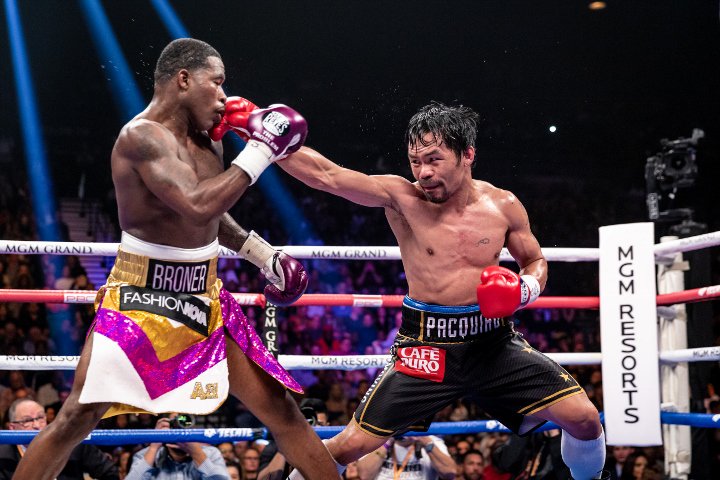
As soon as the final bell sounded, the nonsense began. “I beat him,” Adrian Broner repeated as his cornermen removed his gloves. I looked down at my notes and wondered if I had missed a few rounds⎯maybe all twelve. I had the fight 118-109 in favor of Manny Pacquiao. Broner I gave one round. The fourth, I suppose. Then he said something about being robbed, and I thought, if he cared about being robbed, he would have done more to stop the twelve round mugging he just experienced. But I have come to expect these things from Broner, the performances and the antics to follow. As many fight people have rightfully said, he is a case of unfulfilled promise, squandered talent. I am not simply referring to his clowning. Even the Greatest, Muhammad Ali, clowned. In a 1977 exhibition against Michael Dokes, Ali, pinned in a corner, arms on the ropes, dodged twenty-one punches in ten seconds. Dokes looked like he was shadow boxing. When Ali reappeared, he opened his eyes wide and wiggled his hips to further taunt Dokes. Ali could play the fool. Throughout the years there were bear traps, blank pistols, and gorilla costumes, but then he would go to Manilla, to Zaire, to San Diego (where he would finish a fight against Ken Norton with a broken jaw), step on the ring apron, and get dead serious. The great ones know that there’s a time for this and a time for that.

Broner purported to know this as well, stating that his initials A.B. would now stand for “Another Beginning.” This connected with fans. Who doesn’t love a redemption story? But by the end of the bout and the post-fight conference, one journalist said that A.B. still stands for “Ass Backwards.”

It was evident before the fighters came out of their dressing rooms; the crowd at the MGM Grand in Las Vegas that night was with Pacquiao. “Manny! Manny!” they exclaimed in unison before the start of action. For his part, the old man looked good for forty, and, in fairness, Broner, freshly shaven, too, looked ready to go.

Round one. Pacquiao came out jabbing, throwing combinations, forcing the action. Broner has never been a swarmer, but in the opening round, he barely let his hands go twice. It was more of the same in the second and the third rounds.

Round four. Broner did a better job of countering, winning his first (and on my scorecard, his last) round of the fight. It’s not that he was especially busy; he simply did enough to edge out Pacman in the round.

Round seven. Pacquiao hurt Broner with a barrage of punches to the head and body. It would be the first of two times that Pacquiao clearly had A.B. in trouble. The second time came in the ninth, when he hit Broner with a straight left on the chin. Broner staggered back to the ropes, and Pacman went on the attack. Whenever the senator pressed the action, Broner went in search of new land on the other side of the ring. By the “championship rounds,” it seemed Broner was only in there to survive. Some, however, saw another reason for his idle hands. In an interview after the fight, former four-division champion Roy Jones Jr. was asked about Broner’s inactivity. It wasn’t that he was just trying to survive, Jones offered. He was looking for one big punch. Either way, looking for a punch and throwing one are two different things, as points are rarely scored for looking. Throughout twelve rounds, Broner threw only 295 punches (approximately 25 per round), landing only fifty. Fifty. (This means he landed only 17% of his punches, or an average of four per round. Four.) Pacquiao threw 568 punches throughout the fight, landing 112, more than double his opponent. By the final bell, it was clear to everyone in attendance⎯besides Broner, his corner, and “everybody” he knew⎯that Pacquiao was the winner. Two of the judges scored it 116-112 in favor of Pacquiao, while the third scored it 117-111.

The farce. When announcer Jim Gray asked Broner what he thought about the fight, he exclaimed, “I beat him! Everybody out there know I beat him…I hit him clean more times.” Gray calmly informed him that he hadn’t thrown more than eight punches in any round. Broner was deeply offended at Gray’s ability to count and accused the announcer of being “against me.” Then came the conspiracy theories. “What they trying to do,” he said, “is get that money again with Pacquiao and Floyd.” It’s not as if the idea of a fix in boxing is out of realm of possibility. There have been fixes in the fight game as long as there have been fights. But if this one was fixed, Broner was in on it. He may not have taken a dive per se, but he certainly pulled plenty of punches. Gray then reminded Broner that he was 3-3-1 in his last seven contests and asked him what he would do next. “Hey, I’m 3-3-1 in my last seven,” he said, “but I’ll be 7-0 against you.” Maybe, I thought. But only if he throws more punches than he did tonight.

The Dream Deferred

The Dream Deferred
By M. Abduh
14 January 2019

There is a significant difference between a prospect and a contender. While the prospect possesses all the skills: speed, accuracy, defense, punching power, etc., what is missing is a strong test of those skills. The prospect has yet to face the kind of competition that allows him to cross over. Lightweight Devin “The Dream” Haney is well-aware of this difference. For months now, he has rejected being called a prospect and has demanded that he be considered a contender. He certainly possesses all the tools. Floyd Mayweather Sr, one of Haney’s trainers, said that he has not seen a young fighter with the natural instincts, timing, hand and eye coordination, etc., since his son, Floyd Mayweather Jr., arguably the best pound for pound fighter of his era. Yet many sportswriters and commentators have continued to label Haney a prospect, and he has taken exception to this, as if someone had called him out of his name. “[A] prospect,” Haney explained, “is somebody that’s coming up, that’s trying to get to the top or coming up or trying to make a name for themself. I feel like I’m already there. I’m ranked in the top ten of three sanctioning bodies, so I’m already up there with those top guys.” This is not mere braggadocio from a brash young fighter; Haney is mature beyond his years in the ring. He has fought smart and done all the right things in his career so far. He has met everyone who has been presented to him, facing a good puncher in Menard, a veteran in Burgos, and a skilled boxer in Ndongeni. And how can anyone say that he is speaking out of turn, especially in a time when a fighter with only thirteen professional fights can be considered the pound for pound best fighter in boxing? (Sadly, I recently saw an interview where a “fight expert” claimed this same fighter–with only thirteen matches–is the best pound for pound fighter ever. It makes Haney’s insistence that he be called a contender seem more than justified.) Haney helped solidify his argument Friday night with a superb performance against the former South African lightweight champion, Xolisani Ndongeni (25-1, 13 KO’s), a former rugby player, who also entered the ring unbeaten.

Their fight was preceded by two good undercard bouts. The first, a heavyweight contest between former pro football player Willie “the Snake” Jake Jr. (8-2-1, 2 KO’s) and Frank “Freedom Fighter” Sanchez (11-0, 9 KO’s) of Cuba. Their eight-round contest was interrupted when one of the middle ropes came loose. It took almost fifteen minutes to fix the problem. But it would only take Sanchez a couple of minutes in the second-round to fix Jake Jr., catching him with a combination of punches and sending him face-first to the canvas.

The second undercard fight featured unbeaten featherweight prospect Ruben Villa (15-0, 5 KO’s), who completely outclassed his opponent Ruben Cervera (10-1, 9 KO’s) of Colombia, winning every round on each of the judges’ scorecards.

Then came the main event. The first two minutes of round one consisted of the fighters “feeling each other out”: bouncing, jabbing, missing, clinching. Then, after the clacks signaling the last ten seconds of the round, Haney threw a series of sharp punches, including a straight right hand, that caught Ndongeni good.

In the second round, Haney began to shoot a hard jab that snapped Ndongeni’s head back. Then, with 1:33 remaining in the round, Haney put Ndongeni on his backside with a chopping right hand. In fairness, the young South African was not badly hurt by the shot; he simply got caught off balance trying to move away from action. Either way, the knockdown gave Haney a 10-8 round.

Throughout the third and fourth rounds, Haney threw some good combinations and was the busier fighter, though he spent most of this time headhunting. Between the fourth and fifth rounds, Haney’s second assistant, his father William Haney, implored him to target his opponent’s body. In the fifth, he seemed to take heed, firing shots to Ndongeni’s midsection and causing him to backpedal to the ropes. Haney continued to rip body shots in the sixth and seventh rounds but never forsook his jab. In the seventh, one of these jabs sent Ndongeni’s mouthpiece across the ring. There were several moments in the fight where Haney seemed on the verge of putting his opponent away, but the South African was, as announcer Barry Tomkins stated, “a game opponent.” He had not come to lie down.

In the tenth and final round, Haney walked Ndongeni down throwing reaching right hands. He seemed desperate to score a knockout. But as the final bell sounded, both men remained upright. By my count, Haney won every round, including a 10-8 round in the second. Two of the three judges concurred, scoring the fight 100-89 for Haney. The third judge, along with announcer Steve Farhood, gave Ndongeni one round, scoring the fight 99-90. (Perhaps a case can be made for giving Ndongeni the seventh round, in which he occasionally scored with a looping overhand right, despite losing his mouthpiece.) So, instead of a knockout, Haney would have to settle for a unanimous decision. And though he dominated the bout from the opening bell, his technique in the fight was not flawless. Haney’s trainers will need to work on the young fighter’s defense. He is prone to drop his left hand to his hip bone, leaving his jawbone wide open. And if boxing is truly all about “hitting and not getting hit,” Haney needs to work more on avoiding his opponents’ counterpunches. But after outclassing a quality opponent in Ndongeni, he deserves, finally, to be upgraded from prospect to contender, and he could not have been more emphatic about this after his victory. In the post-fight interview, he said, “I’m sure the people know what I’m going to say next. I’m a fucking contender!” He then stated that he wants to face the best competition that 135 has to offer. “I don’t turn down anybody, no matter what record. Like I said before, I’m willing to fight those top guys.” At the end of the interview, Steve Farhood asked what’s next for him, after three impressive wins. “Now they can’t deny me,” he replied. But if they continue to do so, it raises the question, what happens to “The Dream” deferred?


Guarding Moonlight

Guarding Moonlight
M. Abduh
November 15, 2018

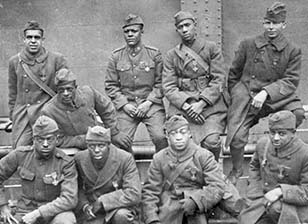
MOST AMERICANS HAVE NEVER HEARD OF ROY UNDERWOOD PLUMMER, black soldier, doctor, Francophile. He is also the author of a diary chronicling his day-to-day experiences during the Great War. His niece, Gretchen Roberts-Shorter, who died in 2017, inadvertently found the 3 ½” by 5 ½” leather bound journal, which she initially mistook for a small telephone book, while cleaning out her uncle’s attic after the home had been sold. What she discovered astonished her:  a neat hand detailing shopping trips, guard duty, military operations, and a race riot. “When I first started reading,” Roberts-Shorter said, “I noticed how well he wrote, and I thought how beautifully he must have spoken.” The great playwright August Wilson stated that “the simpler you say it, the more eloquent it is.” And Plummer’s prose style is indeed simple and eloquent:

Sunday, November 3, 1918

The dawn brushed back a curtain that concealed in its folds a place that really seemed deserving of the term “God-forsaken.” A mere handful of barracks, scarcely more than eight or ten, several thousand feet of lumber, a miniature saw mill, almost a thousand German prisoners and probably less American troops being the only plausible excuse for attaching camp to Talmont.

Plummer was a clerk during the war, most likely because of his writing skills. This was considered a “soft” position, whereas black troops were normally forced to perform menial tasks: heavy labor, setting up camps. What soldiers called “grunt work.” But even when describing mundane activities, like guard duty, his writing could be imagistic. On January 26, 1918, he writes, “Called for the first time for guard duty. Bright moonlight.” One can also see his eye for detail when he writes about a shopping excursion. On May 18, 1918, he wrote, “Went to the town of Libourne in a truck. Saw there a meat market, where nothing but horse meat was sold.”

Detailing one military operation, on Tuesday, January 15, 1918, he wrote, “Ocean very rough. Marines claim there is less submarine operation in such waters, as its periscopes have to be projected much further out of the water and can be more easily seen.” Some operations, however, were not against foreign forces, but against men wearing the same uniform.

Thursday, December 19, 1918

Frictions between the races. Though the colored troops are not equipped with guns, according to all reports, they behaved themselves most bravely and pluckily against the Marines. It seems that the trouble started in a café when a sergeant made some remark which displeased the colored “boys” there and resulted in the sergeant receiving a severe trouncing. The sergeant then really informed his men and incited a riot.

Overall, black soldiers were treated well by French citizens, better than they were treated in Uncle Sam’s army, better than they were treated at home. Plummer felt welcomed in France and immersed himself in the French language, until becoming fluent: On Tuesday, February 12, 1918, he writes, “Went to Bordeaux, purchased some books. Teaching French. Told by cultured woman that I have made wonderful progress in learning French (Bs’ing me? Ha ha).”

A diary from a black WWI soldier was a rare find. Margaret Vining of the Smithsonian said, “From World War I, we have some really fine uniforms and photographs and other materials, but not a diary [from a black soldier].” Roberts-Shorter wanted two things for the diary. She wanted it “to be safe and preserved for posterity in an institution that is hopefully timeless.” This wish was realized when she donated it to the National Museum of African American History and Culture. She also wanted to see it published. Unfortunately, she did not. One can only hope that day soon comes, so the world, like Roberts-Shorter, can discover the stories, struggles, and sacrifices of soldiers like Roy Underwood Plummer.

He goes on to mention “a loss of life” that occurred during the riot.


Keep Alive & Write

Grant Memoir

Keep Alive and Write
By M. Abduh

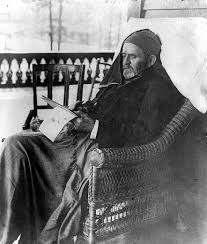
THE STORY OF The Personal Memoirs of Ulysses S. Grant serves as a reminder for the would-be writer, especially in those moments of procrastination (or outright dereliction). In the last year of his life, dying from throat & tongue cancer & in need of “cocaine water” just to swallow, Grant worked every day, some days writing up to 10,000 words. He knew his fate, yet resolved himself to complete the work before his demise, and finished just days before dying. The result was a 336,000-word manuscript of “flawless” prose left in the hands of his friend & publisher, Mark Twain. When Pulitzer Prize-winning author & Grant biographer Ron Chernow went to examine the nine volume manuscript—bound in blue leather—at the Library of Congress, he found it written in the general’s “own hand, starting with the clear, flowing penmanship of the early months down to the cramped, slanted fragments of the later period when pain and narcotics fogged his mind.” Chernow writes that many consider Grant’s work “the foremost military memoir in the English language, written in a clear supple style that transcends the torment of its composition.” So, the story of this memoir reminds the writer to go to the blank page or screen, in the morning or evening, with a sense of urgency, to “find a way to keep alive,” as Baldwin says, “and write.”

From Autobiography to Diary: The True Legacy of Malcolm X

From Autobiography to Diary: The True Legacy of Malcolm X
By M. Abduh

Diary Malcom X

I WAS AROUND FIFTEEN when an older cousin gave me the Autobiography of Malcolm X while helping him clean out his basement. I have little recollection now what drew me to the book. I didn’t know much more than his name up to that point. Perhaps it was the cover, an image of Malcolm, piercing eyes behind those horn-rimmed glasses. He looked like he could “drop science.” He looked serious. I asked my cousin if I could have the book. When he handed it back to me, without even looking up from the stack of paperbacks in front of him, he said: “You not gon’ like it. He was racist.” Needless to say, big cuz was wrong on both accounts.

At the time, I was in some trouble—academically, and legally. Along with failing almost every one of my classes, I caught a vandalism charge for tagging up our school. This got me suspended, and earned me close to fifty hours of community service painting over my “defacement of public property.” I couldn’t have been introduced to The Autobiography at a better time. I found a purpose, direction in its pages. It was all I wanted to talk about. Once, sitting in the pizza shop with two of my closest friends, Madi and Jay, I gave what I thought was a university dissertation on Malcolm’s pilgrimage to Mecca. Jay, with his head tilted catching a string of cheese from his slice, said: “Sound like you about be selling oils and incense soon.” We laughed. And I thought he was probably right. To be honest, we were not very enlightened about the faith at the time; we only knew you prayed five times a day, made pilgrimage to Mecca, and avoided anything with lard in it. Of course, I also didn’t know anything about the questions surrounding Alex Haley’s work on the book (or Haley for that matter), or the number of flawed biographies that followed. But what remains without question is that the truth of Malcolm’s life—and ultimate sacrifice—transcends and outstrips these flawed, and, at times, spurious works; the truth he penned in his own hand, traveling across three continents.

“Whoever is not thankful to the people is ungrateful to God,” says an old tradition. And I am ever thankful to all who played a part in the publication of The Diary of Malcolm X, above all, its author. How impatiently I waited for the book—sitting in manuscript form in the Schomburg Center for over a decade—to be published, waited in disappointment by the delays and courtroom battles holding up its release. When Third World Press was finally able to distribute the book, I ordered it and read it with its packaging still on my lap; and I say without exaggeration, it gave me the greatest sense of relief since finishing Manning Marable’s Malcolm X: A Life of Reinvention. I do not desire, by any stretch, to disparage Dr. Marable, for I recognize and honor his great contribution to the scholarship of black studies. But no matter how loved the person, the truth must always be more beloved. And as a son of Malcolm, it was clear to me that Dr. Marable’s book, in many ways, distorted not only my ancestral father’s story, but mine own as well.  For my narrative is not so different from the countless black youth (and many more elders) in America—nay, across the globe—who have been profoundly and forever changed, and in fact shaped, by the life and legacy of brother Malcolm.

Malcolm X: A Life of Reinvention was hailed in many academic circles as the definitive work on the life of the OAAU founder, Marable’s magnum opus. I was hopeful. But when word of the some of the book’s “disclosures” began to spread, the hope spoiled, turning to worry. I plowed through the book—no small task for a tome of its density. Upon reading the final words of the epilogue and closing the text, I leaned back in my seat and felt trouble in my soul, trouble in my way.

Talcum powder?

Adulterer?

A cuckold?

And these more salacious passages of the book were not even the most egregious of its errors. Thankfully, a number of writers and scholars have since clarified that these reports do not meet the standards of scholarly research: accounts whose sources are persons unknown or unnamed, government and law enforcement agencies: FBI, CIA, BOSS, etc., as well as some of Malcolm’s well-known haters. Thus their credibility, without doubt, is in question, or in the words of Public Enemy, “Can’t truss it.” Moreover, these reports weren’t even a revelation. They were tales that had circulated in the 1990’s, blackening the pages of books that claimed to fill in the lines of Malcolm’s story, to humanize him. What is even more erroneous in A Life of Reinvention (or, more correctly, A Lie of Reinvention) is the distortion of Malcolm’s post-Hajj mission: the continued struggle to bring down the house of “dollarism” raised on the back of black and brown exploitation. And while it is true that Malcolm’s extensive travels the year before his assassination brought new insights, a more global outlook on the problems facing America’s twenty million blacks, it is equally true that until his last breath on the stage of the Audubon Ballroom, he remained a revolutionary, Pan-Africanist, and staunch opponent of America’s system of white supremacy. If one needs proof of this, he need look no further than the film reels, the speeches, and the diary he kept on those travels. “I have not bitten my tongue once,” he writes in one entry, “nor passed a single opportunity in my travels to tell the truth about the real plight of our people in America.” There are numerous passages in the diary similar to this. Passages that demonstrate his undying effort to shine a light on the oppression and degradation blacks have endured for generations; centuries of slavery, Jim Crow, lynching, rape, incarceration, exile, and death.

***

WHILE IT IS TRUE that the biographer must seek to humanize his subject, he should not look to do so through rumor, gossip, and speculation. The biographer, after all, is not a scandalmonger. For some, though, it seems, to humanize a Malcolm (or a Martin) is to simply find a way to pull him down from on high, show the masses that up close the angel’s wings more resemble a buzzard’s. However, Malcolm’s own words, for the sincere chronicler, contain enough truth to humanize him, without need of fictions. He would often trace his own missteps and shortcomings in interviews, speeches—and in The Autobiography. He was flawed, and ultra-aware of it. This attribute is part of what makes him such a singular hero. I can remember my first reading of his autobiography. A reading that leveled everything on my landscape. Yet, at the same time, I recall how uneasy Malcolm’s blind attachment to Elijah Muhammad made me. How every other sentence in those middle chapters began or ended with “The Honorable Elijah Muhammad says such…The Honorable Elijah Muhammad says thus.” And while I was aware of his ardent desire to honor his teacher, to honor the man he said found him in the “muck and mire,” the echo of the phrase was deafening. But by the final chapters, Malcolm would recognize and acknowledge this flaw:

In Mecca, too, I had played back for myself the twelve years I had spent with Elijah Muhammad as if it were a motion picture. I guess it would be impossible for anyone ever to realize fully how complete was my belief in Elijah Muhammad. I believed in him not only as a leader in the ordinary human sense, but also I believed in him as a divine leader. I believed he had no human weaknesses or faults, and that, therefore, he could make no mistakes and that he could do no wrong. There on the Holy World hilltop, I realized how very dangerous it is for people to hold any human being in such esteem, especially to consider anyone some sort of “divinely guided” or “protected” person.

He states elsewhere:

I did many things as a [Black] Muslim that I’m sorry for now. I was a zombie then—like all [Black] Muslims—I was hypnotized, pointed in a certain direction and told to march. Well, I guess a man’s entitled to make a fool of himself if he’s ready to pay the cost. It cost me twelve years.

In an interview for the documentary Eyes on the Prize, actor Ossie Davis was asked about interactions between Malcolm and some of the civil rights leaders of the time. Davis related an exchange that took place between Malcolm and playwright Lorraine Hansberry at a meeting, after his return from Hajj in 1964. Hansberry’s husband was white, and Malcolm had previously excoriated those who married outside of their race. Davis recalls that Hansberry “took [Malcolm] to task” about some of these earlier statements. When she finished, Malcolm simply looked at her and apologized: “I said that because that’s what I thought at the time. But I’m sorry that I said that because now I see that that’s wrong and I hope you will understand and forgive me…I’m bold enough to say that I’ve changed my thinking. I’m sorry about that but that’s what I believed at the time.”

Admissions all too human.

And his diary is an even greater testimony to this. At times we find him second-guessing decisions: “I find myself wondering increasingly how things are going in the states & if I’m overplaying my hand (gamble) by staying away too long.” Other times we find him melancholy blue. In his entry on Fri. Oct. 30, he writes: I had dinner alone at the hotel & retired early feeling a bit lonely.” Then, on Mon. Nov. 16, he writes: “I went for a walk in the rain, alone and feeling lonely.” Again, on Tues. Nov. 17, he states: “I walked around Paris & finally had a midnite, lonely dinner across from my hotel.” There are a number of such entries, and after reading them, one cannot help but be overcome with great sympathy for the “indomitable” Malcolm X. And not only does he allow the reader into moments of self-reflection, but self-satisfaction as well. In his Mon. Nov. 16 entry, he writes: “I slept late then went to buy an overcoat. I’m not very good at shopping for anything. By 4 pm I had finally selected a suit and an overcoat. I felt like a new man when I left the store fully togged. Decent clothes are a psycho boost.” These moments reveal more about the man than many of the works that have been written about him. For this reason, journalist and co-editor Herb Boyd stated that the diary “humanizes him in a way that some of these other scholars set out to do. This is Malcolm uninterrupted. Without any kind of editorial interference.”

***

The Diary of Malcolm X, written in the author’s plainspoken style, covers two trips abroad in 1964. The entries begin on April 15th and end on November 17th, detailing his travels across Africa, the Middle East, and Europe. He not only catalogues the heads of state, their representatives, and organizations he encounters, but also describes towns and landscapes like an Imagist: “Mecca is surrounded by mts, the cruelest looking mts. I’ve ever seen. They seem to be made of the waste material from a blast furnace. No vegetation on them at all.” Entry after entry, he takes the reader to Dakar Airport, the Carlton Towers Hotel in London, and King Tut’s Tomb at the Cairo Museum. It is the chronicle of a man in perpetual motion, in search of answers and solutions to centuries old dilemmas, finding those answers in even older bonds and ties; all the while being surveilled, threatened, targeted, and poisoned. It was due to these whirlwinds circling him that more than one head of state offered him refuge in their lands, but he humbly declined. He felt it his duty to return home and continue the struggle alongside the twenty million other black men, women, and children who had no safe-haven. And at the end of November, he indeed returned home; returned to attempted knifings, a fire-bombing, agents infiltrating his ranks, death squads being assembled in cities across the country, and, finally, shotgun blasts on a Sunday afternoon in the Audubon.

Near the end of the epilogue to The Autobiography, Alex Haley writes that Malcolm signed the contract for the book, gave him a hard look and said: “A writer is what I want, not an interpreter.” Well, this is what the reader gets in the diary. The writer is Malcolm, without Haley or anyone else as interpreter.


When it Snowed in April

When it Snowed in April
By M. Abduh
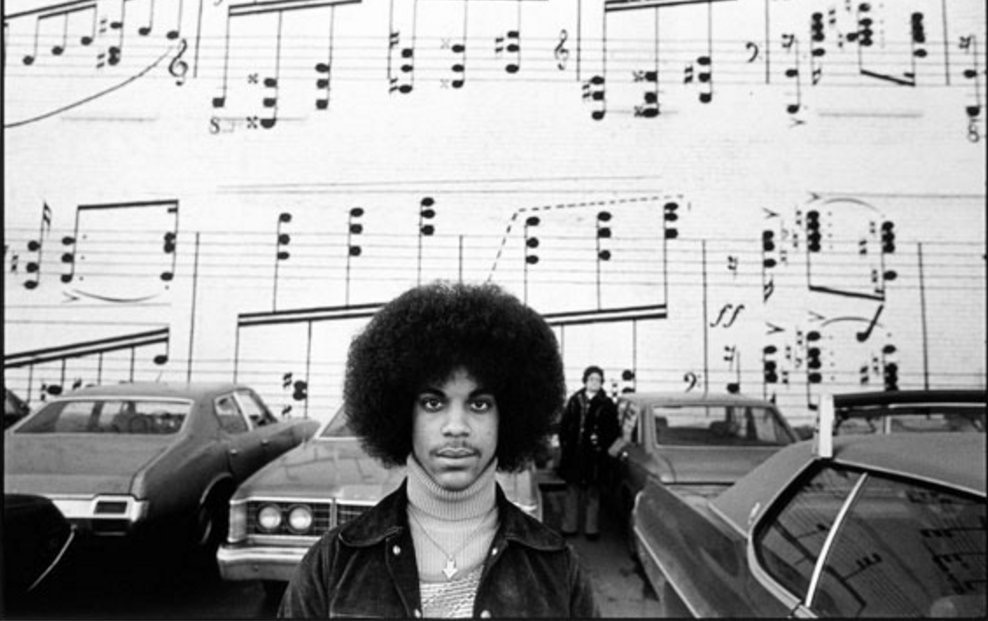
IMG_2390 (1)

Dearly beloved, we are gathered here together to get through this thing called life. —Prince

IT SNOWED this year in April. Large flakes that fell like confetti. My daughter called me from somewhere downstairs. She knew I was writing. She knows not to disturb me. Did she lose a toe? I thought. Even so, this girl knows better. “Daddy, it’s snowing outside!” she called up again. I work in what was once a walk-in closet I call “the hole,” not as dark or damp as solitary confinement, but certainly as cramped, and just as cut off from the world. It was another morning of struggling, sweating over the keyboard like prison labor, and I probably would have been more productive pressing license plates. I rose and went into my bedroom and parted the blinds, to watch the ticker tape. It’s April, I remembered in the moment, then I remembered Prince’s song “Sometimes it Snows in April.” I hadn’t heard it in forever, and the lyrics were like so many other memories: the lingering scent of something. But I could remember the chorus, coming up to me as loud as my daughter’s voice from somewhere downstairs:

Sometimes it snows in April     
Sometimes I feel so bad
Sometimes I wish life was never ending,
And all good things, they say, never last

The NBA playoffs distracted me from the news of his demise. Running late to the university for my 2 p.m. class, I was listening to an ESPN podcast on my phone. My sister, who was dropping me off, was listening to the car radio. I had in my earbuds, but she must not have known I had something on. (How these devices help us ignore each other.) We were crossing the Walt Whitman when she said something to me. I thought she might be badmouthing the toll booth operators again. I nodded, half smiling, pretending to hear her. When the guy in the toll booth took my ten-dollar bill, he swiped it with a marker and held it up to the light, long enough to count every line in Hamilton’s face, then counted my change three times. How long does it take to count five ones? I thought. A dollar a minute it appears.

Despite delays, I arrived to class a few minutes early, and there were only a handful of students present, scattered to the four corners of the room. I answered questions about their essays and checked my text messages. One from a friend said simply: “Prince (crying emoji). I’m so sad.”
Prince?
I went to Twitter (where one goes for news nowadays), and there it was: SINGER SONGWRITER PRINCE DEAD AT 57.
Can’t be real.
The public is always killing off their celebrities, only to resurrect them later in a hologram. I sent my sister a text message:
“Hey, you heard Prince died?”
“Yeah. It was on the radio. I mentioned it to you while we were in the car.”

The students continued to trickle in and take their seats, and I continued to answer questions about grades, problems with their papers: vague thesis statements and awkwardly worded sentences, but I was hearing voices from the beyond:

Come back, Nikki, come back!
I guess I must be dumb, she had a pocket full of horses
Dorothy made me laugh. I felt much better, so I went back to the violent room

For the entire lecture, while I whitened the chalkboard with active verbs and transitions, all I could think of was Apollonia coming out of the water, soft and wet, and Prince telling her, “That ain’t Lake Minnetonka.”

***

I used to cry for Tracy because he was my only friend    
Those kind of cars don’t pass you every day
I used to cry for Tracy because I wanted to see him again,
But sometimes, sometimes life ain’t always the way

It must have been five years ago, when I last spoke to AJ, my best friend from high school. He’d moved away years ago. We’d been in and out of touch probably a dozen times over the years. We laughed about old times, especially our first encounter. Not long after he moved to the neighborhood, he came to the field where a bunch of us always played football, or “kill the man” to be exact. In “kill the man,” everyone crowds around the ball, then one of the players throws it up for grabs. Whoever catches it has to try and make it to the goal line—alive; the other players try to kill him before he does. The game invariably ended in torn up shirts, scraped up knees—and shit talking. AJ was new, so while he might have gotten away with a tear or scrape, shit talking was strictly for those missing teeth in your elementary school pictures. So a couple of us jumped him. But truth be told, we didn’t beat him bad enough to stop him from talking shit.

It’s an old story: you fight, then become lifelong friends. And though our friendship didn’t last a lifetime (it didn’t last much past graduation), in those days we were inseparable. One of the things that made us so close was our mutual love of music. AJ was a drummer. He would constantly tap beats on his desk in class, the lunch table, parked cars, and finally on a set of drums he’d saved up for. I was a rapper who scrawled rhymes all over scraps of brown paper bags and envelopes. AJ tapped beats, I freestyled. We shared not only a love for music in general, but an obsession with Prince in particular. AJ talked chords and bridges. I talked metaphors and images. We would sit for hours on my family’s green crushed velvet couches and listen to Prince records. “Yo! You hear that?” was a constant refrain. I must have repeated that ten times when we first heard “Raspberry Beret.”

The rain sounds so cool when it hits the barn roof         
And the horses wonder who you are
Thunder drowns out what the lightning sees
You feel like a movie star

Not your average pop song poetics: synthesia, personification, narrative full of characters like poor, passive-aggressive Mr. McGee, and the narrator’s unnamed love interest, a woman so free she walks into that shop, and into a one-night stand, through the out door. “Built like she was,” he says, “she had the nerve to ask me if I planned to do her any harm.” And in my teenage mind, I thought: Damn. She must be like Thelma from Good Times. Prince’s words put us there: in the five and dime, at Old man Johnson’s farm, in that barn. This was my first introduction to imagistic writing, well before I heard of an Ezra Pound or H.D.

Those Prince listening parties continued throughout high school, as he dropped an album every year: Purple Rain, 1984; Around the World in a Day, 1985; Parade (my personal favorite), 1986; Sign o’ the Times, 1987; Lovesexy, 1988.

Then, in our senior year, right around graduation, Michael Keaton took on the role of the Caped Crusader in Tim Burton’s Batman (darker than the onomatopoeic fist fights of the old Adam West series). Prince supplied the soundtrack, and the single “Scandalous” alone was worth the price of the ticket. Unfortunately, that album would be the end all. I left for college in Brooklyn at the end of the summer. AJ went into the Air Force.  I hadn’t really thought much about any of this in those five years.
Then Prince died.
One of my first thoughts after receiving the news was of my old friend. I wondered how the word reached him. How he reacted. If it took him back to those green crushed velvet couches again.

***

Springtime was always my favorite time of year,           
A time for lovers holding hands in the rain
Now springtime only reminds me of Tracy’s tears
Always cry for love, never cry for pain  

On his HBO special Never Scared, Chris Rock says, “Whatever music was playing when you started getting laid, you gonna love that music for the rest of your life,” but love really is too weak to define just what Prince’s “Adore” means to me; the song that got me leg-locked in the slow drag of a lifetime with my teenage love. Staci was a Nia Long, before Nia Long: caramel complexion, slim, with a cute mole above her lip. She looked soft-spoken, but when she opened her mouth, it came out deep and raspy, too deep for a girl her size. It was almost as comical as hearing the devil come out of the little girl in the Exorcist. Whatever. Possessed or not, Staci was gorgeous.

In the summer of ’87, we threw a party in a run-down community center: no door on the toilet stall, spider web cracks in almost every window, and a dirty, scuffed up sardine linoleum tile dance floor. The center’s staff made sure the bar along the back wall was dry, since we were minors, but there were bottle-topped brown paper bags everywhere. We charged whatever dollars we could.  My man Bun, who was big as Refrigerator Perry, was at the door collecting the money and marking hands. I knew Staci was coming and told Bun to make sure he got me before letting her and her girlfriends in.

It was loud in the in the hall—loud music, louder talk, and the usual huddles of different neighborhoods planning a melee. A little after eleven, AJ tapped me and pointed to the door. Bun had his hands up like he was about to start juggling. Behind him in the doorway was Staci in a bright turquoise blouse.  It made the hall even louder. I came over and took the marker from Bun. “I have to charge you extra,” I said. Her head snapped back, and she squinted until there was almost nothing but lid. “Boy, stop playing!” I put the cap on the marker and leaned into her ear, “It’s because of that shirt. You gon’ have the electric bill sky high.” She slapped my shoulder. “You know you like it,” she said.
I did.
I told her, her sister and girlfriends they didn’t have to pay, and marked Staci’s hand. “You owe me a dance. A nice slow one,” I said.
“I’ll just pay then.” She smiled, and her sister and friends pulled her into the fray. Bun shook his head, “You paying for all them?”

We had to end things by 2 a.m. So around one, I gave AJ the word to put it on.
The applause of a crowd, organ grind…
Until the end of time…
I reached through her girlfriends and pulled Staci out by the elbow (like a camel through the eye of a needle).
I’ll be there for you
”You think you slick,” she said in my ear. She leaned back and pointed to the then smeared phone number I wrote on her hand when she came in.
 If God one day struck me blind
“That shirt I’d still see,” I sang over the lyric.
She stopped dancing. I pulled her in closer. She put her cheek on my chest and wrapped her arms around the back of my neck. She smelled like a combination of pink lotion and sweat. I ran my hands down her back. She felt even smaller than she looked, like I could have strummed along on her ribs.
I truly Adore you
“I’mma take you home after this, all right?”
She sucked her teeth and rocked low.
“I love this song,” she said.
“I know.”

***

All good things, they say, never last
And love, it isn’t love until it’s past

Musically, in our house, for everyone under forty my big sister was the tastemaker. She was our gateway to hip hop, blasting Lady B’s rap show on WHAT Saturday afternoons until the signal faded. She always had the new records first: Spoonie Gee’s “Love Rap,” Kool Moe Dee and the Treacherous Three’s “Heartbeat,” and the heaviest spun album in her collection: “One Nation Under a Groove” by Parliament-Funkadelic. A congress of horns, synthesizers, guitars, banjos, and congas. I was drawn not only to their music, but the wild cover art, an alien band raising the R&B flag high above the world. To some, they were out there, otherworldly, but their funk came from home, out of the earthly sojourn across continents, oceans, and plantations, migrating north to a barber shop in Plainfield, NJ, inspired by James Brown, Hendrix, Sly and the Family Stone, and in turn inspiring generations to follow—among them, Prince.

When Parliament-Funkadelic was inducted into the Rock & Roll Hall of Fame in 1997, the Artist (as he was known at the time) said as much when he spoke of George Clinton’s overarching influence: “I went to see him at the Beverly Theater, and it was frightening. Fourteen people singing knee-deep in unison. That night I went to the studio and recorded “Erotic City.” Needless to say, he’s been an influence on me and everyone I know…That’s all we groove on.” And it was true; their sound would funk up every record from Three Feet High and Rising to Straight Outta Compton.

And just as my sister introduced me to hip hop and funk, I first heard Prince after shuffling through the stacks of records piled up beside her bed. My favorite then was “Little Red Corvette” on the 1999 album. The cover art was as psychedelic as Funkadelic: a star-clustered purple sky, with eyes in the 9’s staring back at me. I would play that song over and over, too young to know anything about one-night stands or the metaphors Prince was using to describe them, but I loved the synthesizers, the drums, the echoing claps, and most of all, the guitar solo. I had a not so well kept secret in those days. For all the hip hop, funk, and R&B of my house and neighborhood, I loved hard rock. (Jazz I rejected as my “father’s music.” It wouldn’t be until my twenties that I gained an appreciation for the genre.) I was a huge KISS fan, introduced to their music by a white kid from school named Adam. The secret earned me the nickname “White boy” with my cousins, aunts, and uncles. It would be years of teasing before I would learn that the roots of this genre went back not to white boys, but to our Blues People, guitarists like Lead Belly, a favorite of Kurt Cobain. So when I heard that guitar solo on “Little Red Corvette,” I was happy to know I wasn’t the only white boy. I played that record until I put a scratch in it. Halfway into the song, it would skip all the way to the end, well beyond the rubbing alcohol remedy. I knew better than to be in her records when she wasn’t home, just like I knew better than to mumble a word about scratching one of them up. That, too, would remain a secret until the day Prince died.

When my sister picked me up that evening after classes, we talked a little about nothing for a few traffic lights, and then I said: “Prince. Ain’t that crazy?” She shook her head in disbelief. “It’s all over the news. I’m going to watch Purple Rain tonight.” I turned down the radio. “Hey, guess what? You know…Remember your 1999 album got all scratched up…?”
“And you, what…say something thirty years after the fact? I should have known it was you. I blamed everyone in the house but you—What is it $9.99 on iTunes?” she said.
“I got you,” I said laughing.
“I loved that album,” she said.
“I know.”
Laugh Now

Laugh Now
By M. Abduh

Masks

THE SUGAR WATER LOUNGE has hosted an open mic night once a week for close to two years, popular with area wannabe’s: singers, spoken word artists, and comedians who have few other options on Thursday nights. Everyone here has certainly seen these performers touch the mic a hundred times, like some repeated punishment in the afterlife. When I arrive, early in the evening, there are not enough people to actually call it a crowd. It is more of a spattering of patrons at tables, some eating and drinking; many focused on their cell phones, all eyes and thumbs on lit screens. Others sitting at the bar talking or shaking their heads at the game playing overhead, the Sixers again down by double digits. In the back of the room sitting at a table that should have been cleared two rounds ago is aspiring comic AJ Blackwell, who’s been coming to Sugar Water’s for close to a year now to work on his set. Every few seconds, he looks over an index card lying on the table. It’s creased down the middle widthwise and filled with bulleted notes in green ink. There was a time, he says, when he didn’t need to look at anything before a set; once boasting an almost photographic memory, able to read back paragraphs of text by heart after looking over it for only a few minutes. Next to the panoply of shot glasses and plastic cups (he swears only the water bottle is his) is a deck of playing cards. He arranges the cards according to suit and number then begins to flip them over, a memory boosting trick he saw on YouTube. He’s fidgety. Picking at his beard with his fingers like he’s trying to remove rice. His left foot planted next to the table leg, his right tapping rapidly against the floor. A casual observer might mistake this for performance anxiety, but this isn’t stage fright. The comedian’s behavior is the result of a previously diagnosed condition. AJ suffers from bipolar disorder. Those who know him would guess from his behavior that he’s off his meds again. Often, especially before sets, he skips doses, complaining that they drain him, prevent him from sleeping. “I feel like had a lobotomy when I take those fucking drugs.”

Well before his diagnosis, he was always obsessed with comedy. His older brother, who works for a local radio station, recalls his childhood fascination. “He loved all that goofy shit—The Muppets, Bugs Bunny. But he was scared to death of that Tasmanian Devil. He would pee the bed at night instead of going to the bathroom. Thought the Tasmanian Devil would jump out and get him in the hallway.” Simply the result of a child’s overactive imagination, the family reasoned, but as he grew, so too did his fears.

* * *

THE ROOM ALMOST DOUBLES in an hour, right before the open mic is set to begin. Some singers and a few spoken word artists have also signed up. AJ hates to sit through spoken word. To him they sound too much like neo-Beatniks stretching their vowels into the clouds, Wake uuup! Up Waaaake! Wakin’ uuuup! To-what-is-uuup! Poems filled with abstractions: Love, and longing, Hallmark-ed up rhyme schemes, and stories lamenting days of loss and nights lost in lament. “Why they all sound like that?” he says. “All the same. That Sonia Sanchez shit.” “You don’t like Sonia Sanchez?” I ask. He folds the card and scratches his cheek with it. “Of course,” he says, “that’s my auntie.”
The club’s emcee begins to call the performers up to the “stage.” He means this figuratively, of course, because what he’s actually calling them to is nothing more than an elevated platform beside the bar with barely enough room for a stool and a mic stand. AJ is first. Looking up at him, for the first time, I realize just how imposing a figure he is—over six feet tall, with huge hands. Wilt Chamberlain certainly could have met his mother. He pulls the mic and rubs his forehead. The first joke takes an era to set up, but gets a decent laugh in the end:

To show you how much fat women turn me off…I’m lying in bed one night flipping through channels and an Oprah rerun is on—“Next on Oprah: Famous actress molested as a child by her uncle.” So, I think, this has all the ingredients of a good late night jerk off. Star actress and her dirty uncle. Had my hands under the covers just waiting for the KFC commercial to end—now I’m hungry and horny—comes back on, and Oprah says: “How molestation inspired Mo’nique to give her Oscar winning performance in Precious.” And I’m like wait, did she just say Mo’nique? Chunky ass Mo’nique? Her uncle is dirtier than I thought. My hand was out of the covers and back on the remote. Fuck it. Suzanne Somers must have an infomercial on somewhere.
 

The routine is irreverent, possessing flashes of potential; though much of the material is raw and misses his audience. But the comic says he refuses to be pigeonholed. “I mean, nothing should be off limits,” he tells me. “Comics like Flip Wilson and Richard Pryor appealed to everyone.” Coming from a student of comedy—like AJ—this seems a strange, almost naïve statement. One with even cursory knowledge of these great comedians knows that they were able to tailor routines to suit their audiences. And although AJ seems quite convinced of the universal quality of the material, some of his references are simply too obscure. A joke about his medication incites a heckler at a table in the back. “People get embarrassed in front of their priests or therapists. Me, I’m most embarrassed in front of my pharmacist. I mean, I’m on Risperdal, Aciphex, and Viagra. So he knows I have head problems, stomach problems, and dick problems.” At this, the heckler yells out, “Hell is Risral?” Over time, AJ says he has gotten better at shutting down hecklers. He looks into the crowd, in the direction of the voice, “It’s a drug, motherfucker. And not like that shit you on…Sure wish I could see your ass. Nigga so black, at his house they call birthdays the Dark Ages.” His comeback gets a good laugh, a smattering of claps, even the heckler seems amused. But AJ is now visibly agitated. He pulls the index card out his breast pocket and squints at it. The mic lands on his thigh in a thud. He wipes his face, and mumbles something under his breath as he steps down and walks toward the bathroom. After a moment, the hush in the room rises in a babel of voices. The emcee quickly calls up the next performer.

* * *

AJ GREW UP IN THE SUBURBS OF SOUTH JERSEY, the youngest of three brothers. As a teenager, he was most proud of his extensive collection of comedy albums and videotapes. He collected Pryor, Dangerfield, and Robin Harris recordings the way his father collected Ahmad Jamal (AJ’s namesake) and Max Roach records. He first took the comedy stage when he was only fourteen. After high school, he attended Farleigh Dickinson University, majoring in English.  It was in his second year that his condition worsened. His uncle Vaughn says at this point, the depression took over completely, “He got real quiet, barely left his room…always irritable.” He finally dropped out of school, and the family tried to convince him to see someone. “My sister was so worried about him,” his uncle said, “she took a leave from work to take care of him full time.” He was eventually evaluated and diagnosed with bipolar disorder and depression. After some therapy and being put on antipsychotics, he began to show improvement, returning to some semblance of normalcy. He did, however, complain that the medication made him sluggish and weakened his memory. “I’d take PATCO and wouldn’t remember what town I was in until I saw a sign or something.” And like others who suffer from bipolar disorder, he would go on and off the drugs. I ask how the disease has affected his art. His face balls up, “Not at all.” Perhaps he is right, as some researchers, like Gordon Claridge of Oxford University, believe that the creative elements needed to produce humor are quite similar “to those characterizing the cognitive style of people with psychosis—both schizophrenia and bipolar disorder.” Claridge also states that “manic thinking, which is common in people with bipolar disorder, may help people combine ideas to form new, original and humorous connections.” However, one should be careful not to romanticize such connections, as many who suffer from mental illness are far from creative geniuses.

After almost ten minutes in the bathroom, AJ emerges wiping his face with a ball of toilet paper, small pieces of tissue stuck to his forehead. He leans against the wall next to the exit and watches the comedian on stage. The crowd erupts in laughter at one of his jokes, but AJ only grins. Those close to him say that a smile and a light chuckle is about the most you will get out of him, no matter how funny the routine. “Some people fall out and can barely breathe when they hear something funny,” he says. “I mean, I may feel the same thing, just express it different. It’s like a dude who works on a porno set, after a while his dick doesn’t even get hard. Director yells ‘Action!’ and he’s there adjusting lights.” He smiles, finding the humor in his analogy.

Of the many artist circles I have observed, comedians seem the most tribal. Every few minutes a fellow comic comes up and taps him on the shoulder or leans in for a private word. AJ says this is what he loves most about comics in the New York clubs; you can often find a bigger name sitting and commiserating with an up and coming (or down and going) comic. As time passes—and a few more acts—he’s completely calm. The nervousness gone. “I just have to take the pills,” he says. “Fucking shame. You know depression and suicidal thoughts are side effects? That’s what they call false advertisement. An anti-psychotic that makes you psychotic.”

There isn’t a clear picture how far AJ’s comedy will take him, if anywhere. Due to his health, he doesn’t work the road, so his career has been confined to small local venues and New York comedy festivals. When he takes his meds, he complains that they stunt his creativity; when he doesn’t, the depression weighs on him like a heaviness. But he’s well aware that other artists have also battled mental illness. “Me and my dad watched a documentary the other night about Donny Hathaway,” he says. “He had a gang of problems, in and out of the hospital before he finally jumped out a window.” I ask if he’s ever had those kinds of thoughts. “Nah, my room’s in the basement.” This time no smile follows his quip. His eyes are more distant, uninterested. I ask if he believes comedy has healing properties as many suggest. “I don’t know. Let’s see. Freddie Prinze shot himself in the head. Richard Pryor set himself on fire. I could go on.” AJ cups his chin in his hand and sighs. “Maybe it’s like they say, laugh now, cry later.”

A Joyless Noise

A Joyless Noise
By M. Abduh

IGNORANCE OF A THING does not make it nonexistent. For years, we have witnessed a bank of talking heads—sportscaster and journalist Stephen A. Smith most recently—ask: “Where is all the noise about black lives mattering when blacks kill other black folks?” A good question is often half the answer, yet here the questioner has started in the negative. To begin, the very concept of “black on black crime” ignores the fact that murder, assault, theft, etc. in the main are crimes of opportunity—and proximity.  Thus, by and large, the rapers of white women are white men. With that, and the fact that white men are statistically far more likely to be mass shooters, there exists nothing in our discourse called “white on white crime.” And as for the claim that blacks do not make noise when their killers are black, then Mr. Smith & Co. need reminding that the devil is a liar.

Noise has been made, in song, in literature, in film. One need look no further than the Stop the Violence Movement of the late 1980’s. After the death of a fan at a concert, artists like KRS One and BDP, along with Stetsasonic, Kool Moe Dee, MC Lyte, Doug E. Fresh, Just Ice, Heavy D, and Public Enemy came together to create the anti-violence anthem “Self-Destruction.” The song spoke specifically to “black on black” violence. Kool Moe Dee (of Busy Bee fame) states,

Back in the 60’s our brothers and sisters were hanged.
How could you gang bang?
I never ever ran from the Ku Klux Klan
And I shouldn’t have to run from a Blackman

Moe Dee’s lyrics are clear. The reader need not refer to Rap Genius for an annotation. Here the violence perpetrated by Amerikkka’s most viscous domestic terrorists, the Klan, who hung, raped, castrated, bombed, and burned black flesh—because it was black flesh—was not his immediate threat; instead, it was the flesh of his flesh chasing him. Also, in the song’s music video, during the late Heavy D’s verse, we see the message: 84% of violent crimes against blacks were committed by black offenders… crawl across the bottom of the screen. And while the numbers are quite similar for whites committing crimes against other whites (83% of white murder victims are killed by other whites), to Mr. Smith’s point, people in the black (and hip hop) community have always made noise.

After those artists came together on the East coast, a number of their peers on the Westside, artists like King Tee, Body & Soul, Def Jef, Michel’le, Tone-Loc, Above The Law, Ice-T, Dr. Dre, MC Ren & Eazy-E, Young MC, JJFad, Oaktowns 3.4.7, Digital Underground, MC Hammer united to create the song “We’re All in the Same Gang.” Addressing the gang bloodshed, and “fratricide” taking place in LA; these artists created a song with a message similar to that of “Self Destruction,” and like “Self Destruction,” “We’re all in the Same Gang” addressed brothers killing other brothers:

Kill a black man?
What?
Yo, what are you retarded?
Tell ‘em Hump
Do you work for the Klan?
Do what ya like
Unless you like gangbangin’
Let’s see how many brothers leave us hangin’

Humpty Hump of Digital Underground reasons that these black killers might as well be the in the same gang as the Ku Klux Klan, and in the song’s video, when reciting the last line, he pantomimes being hanged at the end a rope, likening this black on black lynching to the strange fruit Billie sang of. In the years that followed these two songs and movements, there arose a number of artists who continued to scream us awake, from them, New Rochelle’s Brand Nubian. Their lyrics, samples—their very name—spoke not only to black pride and “knowledge of self,” but self-preservation as well, with songs like “Wake Up” and “I’m Black and I’m Proud. Brand Nubian’s Grand Puba says,

Do the knowledge, Black
Look at the way that we act
Smoking crack,
or each other with the gat.
The only race of people who kill self like that
I deal with actual facts to keep my mind on track

Of course, when we do the knowledge, actual facts show that every race of people kills self like that. Maybe Mr. Smith was not a Brand Nubian fan. Ice Cube, perhaps? In his song “Us,” from his classic album Death Certificate, the voice of the song excoriates the perpetrators of what he deems pathological, self-destructive behavior: “And all y’all dope dealers/you as bad as the police, cause you kill us.” So just as Kool Moe Dee and Humpty made comparisons between “black on black crime” and the terrorist violence of the Klan, Cube here juxtaposes extrajudicial killing at the hands of state agents and proxies, sworn to serve and protect the citizenry and backed by the powers that be, with crimes committed by…us. And so it does not appear that we are stuck in nostalgia, citing verses from hip hop’s “golden era,” we also hear these voices echoed today by artists such as Compton’s own Kendrick Lamar. In his song “The Blacker the Berry,” he says,

So why did I weep when Trayvon Martin was in the street,
when gangbanging make me kill a nigga blacker than me?
Hypocrite!

For Lamar, the shedding of tears (perhaps even marching, raising voices, etc.) when a black man is killed by whites, but not doing so (allegedly) when the gunman is black smacks of hypocrisy. On that same note, in an interview with Billboard, Lamar states: “What happened to [Michael Brown] should’ve never happened. Never. But when we don’t have respect for ourselves, how do we expect them to respect us?” It’s all there. Black pathology. Respectability. Hypocrisy. Mr. Smith, holler if you hear him.

Rappers have not been the only artists to speak on it. After the Blaxploitation films of the 70’s, heroes and sheroes like Shaft and Foxy Brown “taking it to the man,” the 80’s gave us black street culture in films like Beat Street, Breakin’, and Wild Style. Then in the 90’s, black filmmakers explored not only the subject of police brutality and the injustices of the criminal justice (just us) system, but “black on black” crime as well. John Singleton’s Boyz N the Hood opens with the voices of a group of young men: angry, cursing, Black: “Yo fuck that. Where my strap?” Alarm chirps, car engine starts, revs. “We fin to let these niggers have it.” Guns click, tires peel—more curses—and finally, machine gun funk. The screen fades to black and there appear the words: “One out of every twenty-one Black American males will be murdered in their lifetime. Most will die at the hands of another Black male.” This opening sets the tone: black men die young, they die violently, they die at the hands of other young black men. This theme runs through a number of the films of the decade: Menace to Society, South Central, Clockers, etc. (Today, in 2015, Spike Lee has again focused on crime’s black hand in his latest film Chiraq, repeating in interview after interview that it doesn’t matter to the family of victims what color finger pulled the trigger.) So either Mr. Smith “don’t know or don’t show” what these films are saying.

In 2012, Atlantic Monthly correspondent Ta-Nehisi Coates penned an article entitled “Why Don’t Black People Protest ‘Black on Black’ Violence?” The article came as a result of a question posed by some after the death of Trayvon Martin: “But what about all the other young black murder victims?” meaning, at the hands of other black people. In the article, Coates lists a number of anti-violence rallies that had taken place in cities from Chicago to Brooklyn, stories of residents and community leaders—weary of laying their dead to rest, and laying stuffed animals where they died—who organized marches, prayer circles, candle light vigils, and “take back the street” protests. Reading of—and indeed, witnessing—these gatherings year after year in neighborhoods across the country is indisputable proof of the great effort to cry out about the violence. Thus, for Stephen A. Smith to ask where is all the noise about black lives when blacks kill one another is a clear demonstration of his tone deafness, or perhaps he cannot hear due to his constant ranting, which often resembles a child sticking his fingers in his ears when he doesn’t want to hear what’s being said: La-la-la-la-la-la! For him to speak as if these dedicated marchers and organizers, mothers and sisters, husbands and wives, co-workers and classmates have been mute, in some perpetual moment of silence, as opposed to urging and exhorting their children and kinfolk in the streets is contemptuous.

Many Black writers, journalists, & cultural workers remain in the tradition of Ida B. Wells, documenting state violence against black bodies, giving voice to the unheard, speaking truth to power concerning incident after incident of unpunished killings & unindictable killers. They also remain in chorus with the aforementioned organizers and marchers against neighborhood violence. Perhaps if Mr. Smith would hush his ranting, remove the fingers from his ears, and listen, he could hear the noise of protest.