Writers on Fighters: Gwendolyn Brooks’s “Black Steel”

Writers on Fighters: Gwendolyn Brooks’s “Black Steel”
M. Abduh
27 November 2025

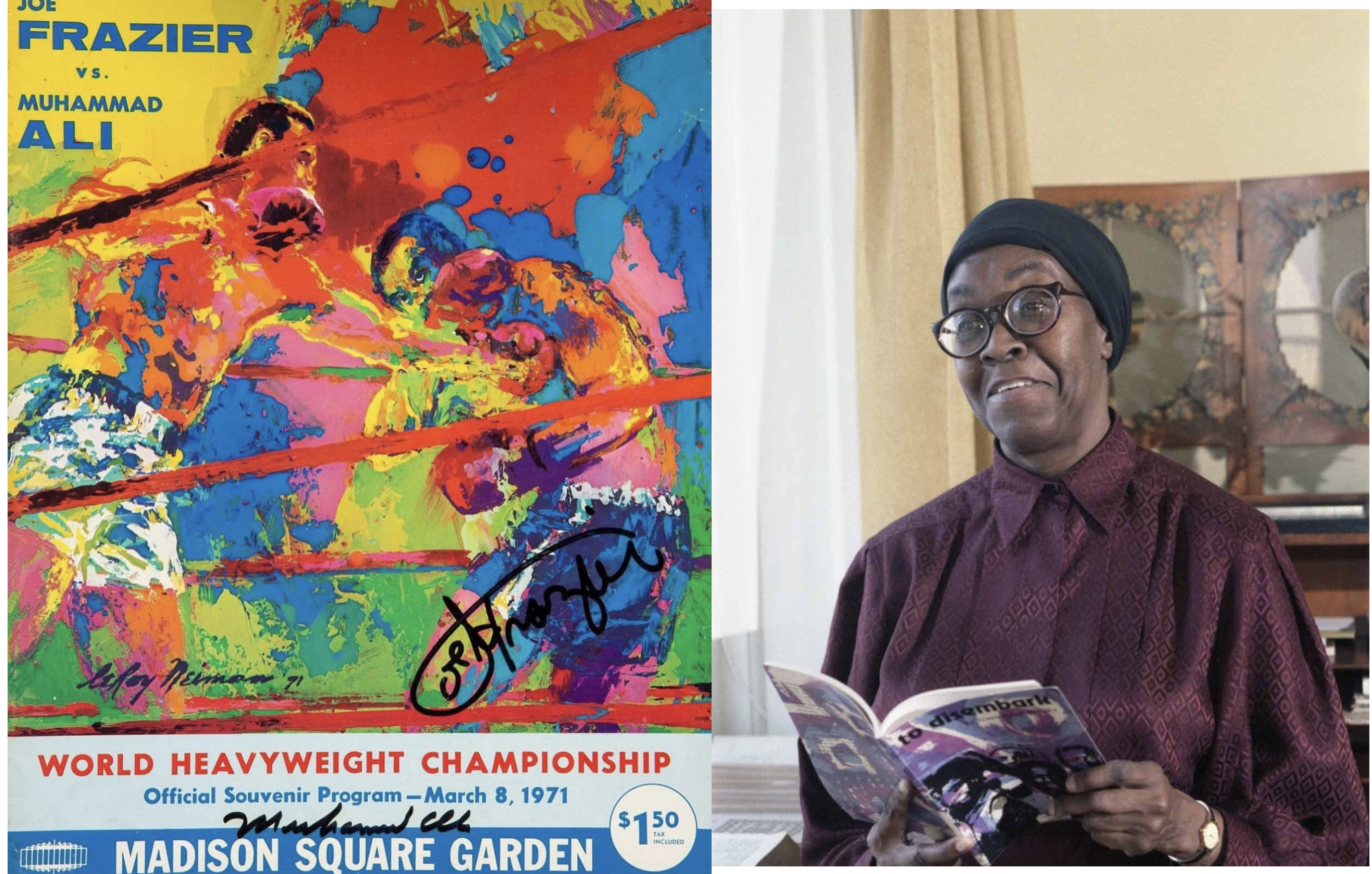
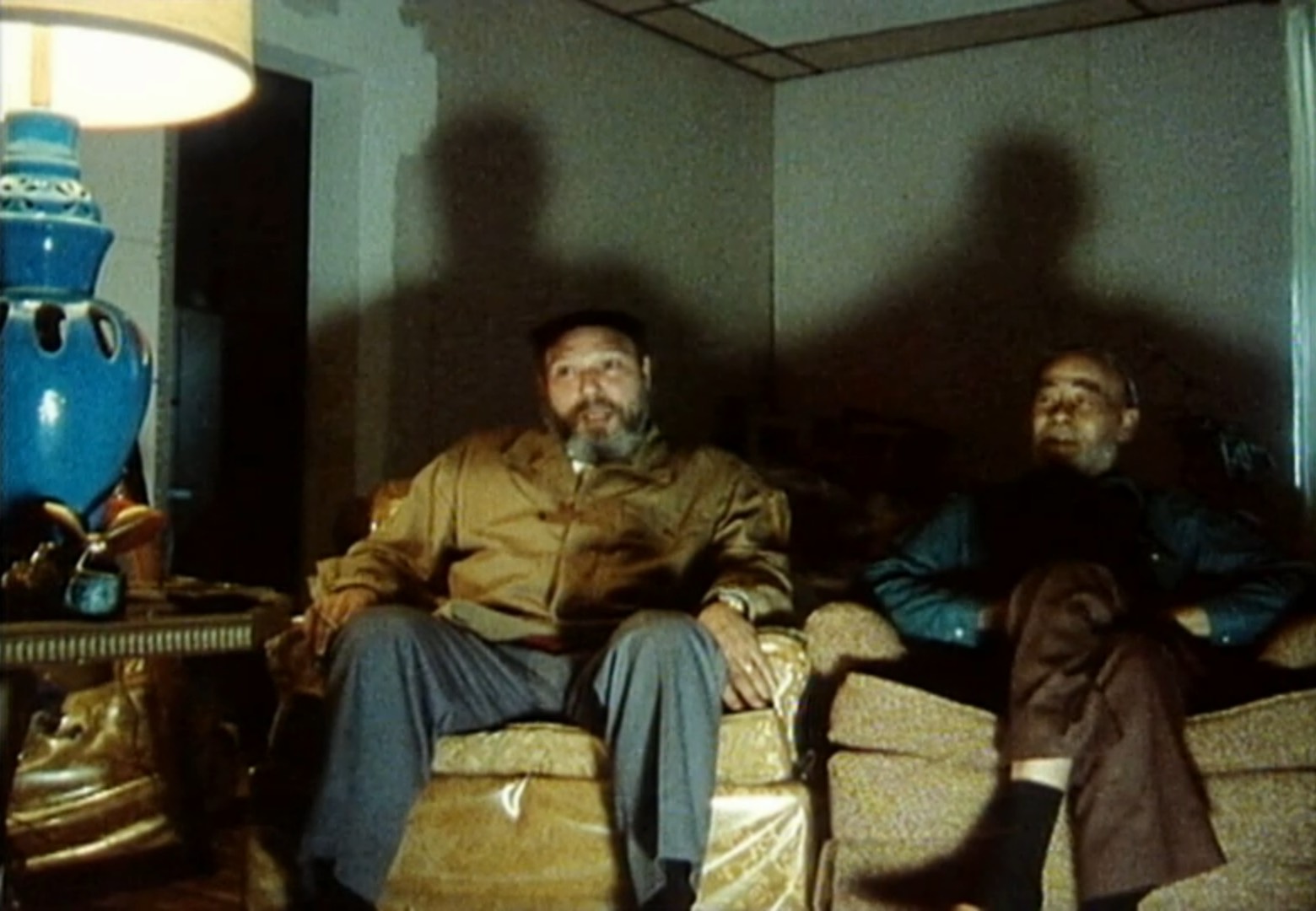
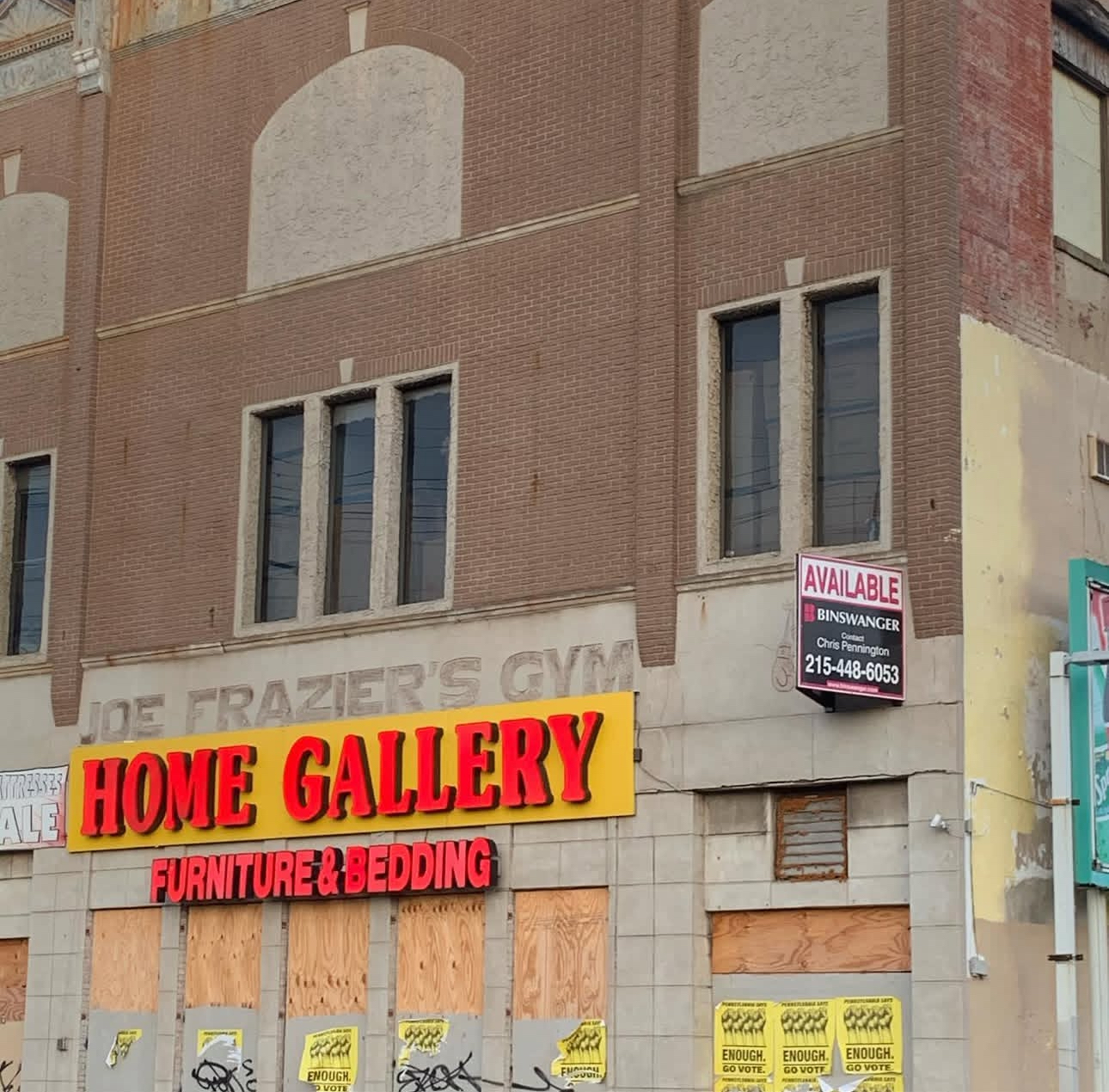
On March 8, 1971 in Madison Square Garden, Muhammad Ali & Joe Frazier met in what was dubbed “The Fight of the Century.” While Ali had been exiled from boxing for refusing the draft during the Vietnam War, Frazier won his vacated title. Ali insisted that he had not lost the crown in the ring, so  he remained the champion. Frazier welcomed the challenge & even lobbied for Ali to get a license. 

Upon Ali’s return to the boxing, this fight was the most highly anticipated event in sports. The first time in history two undefeated heavyweight champions would meet in the ring. It was the beginning of a bitter rivalry. The start of  an epic trilogy. 

Before the opening bell, the drama & the poetry of the blood feud appeared in the poem “Black Steel” by Gwendolyn Brooks, commissioned for the fight and printed in the fifty-two page official on-site program. 

In it, Brooks employs metaphor, alliteration, whatnot to detail this “roaring thing,” this “Calculated Blaze.” But ultimately she reminds the combatants, reminds us all, that black love remains unbeaten:

But
when the last bell’s business dulls away,
know that the echo’s message is black love.
Pick up the pieces of the Brotherhood.
Let
black love survive the Calculated Blaze.
Let
black love survive the Challenge and the Blood.

Black love somehow survived Madison Square Garden, Fort Pillow, Birmingham, Watts, Kinshasa, Manila. The last bell still dulling away. Still picking up the pieces.

Writers on Fighters: James Baldwin on Patterson vs. Liston

Writers on Fighters: James Baldwin on Patterson vs. Liston
M. Abduh
26 November 2025

“The Fight: Patterson vs. Liston” was originally published in the February 1963 issue of Nugget Magazine & later collected in The Cross of Redemption: Uncollected Writings.

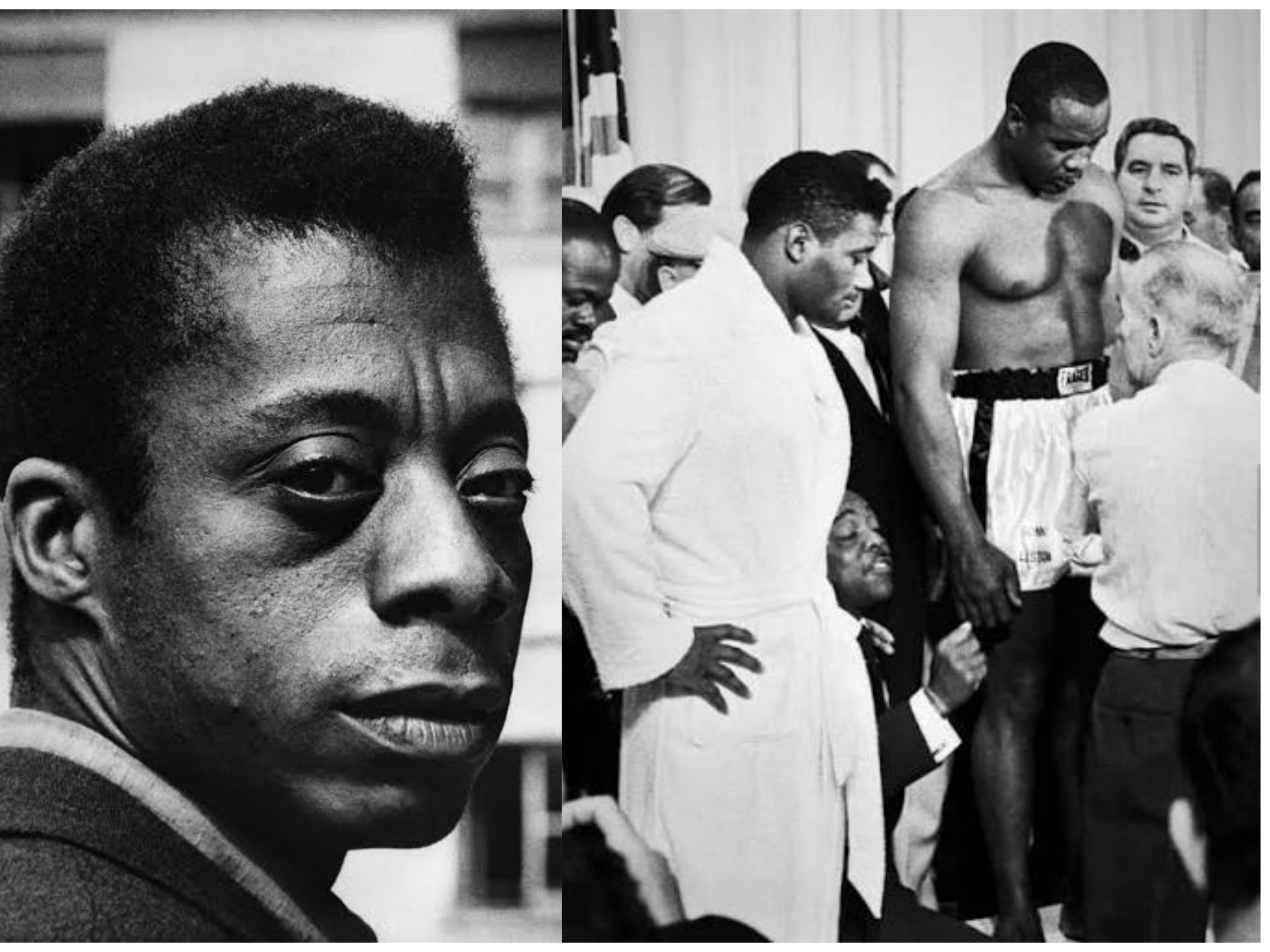
James Baldwin is not known for writing about boxing. Even in his profile of the Patterson-Liston fight, he begins by admitting that he knew little about the “Sweet Science” or the “Cruel Profession”: “I am not an aficionado of the ring,” he said, “and haven’t been since Joe Louis lost his crown.” Still, he masterfully profiled the fighters & their camps, captured the days leading up to the event, & contextualized the cultural significance of the contest. The fight itself, though, gets barely a paragraph. The profile ends—after Liston demolishes Patterson in two minutes—with Baldwin having a drink with a writer who knew plenty about the sweet science: “We started walking through the crowds and A. J. Liebling, behind us, tapped me on the shoulder and we went off to a bar, to mourn the very possible death of boxing, and to have a drink, with love, for Floyd.”

Sixty-three years later, Liston & Patterson are gone. Baldwin, too. Boxing is still dying. We are still mourning.

The Last Supper

The Last Supper
M. Abduh
6 November 2025

Before I went plant-based & became one of les misérables, people would tell me, “Cut out red meat. Eat more fish. It’s healthier.” Then I read that the actor Jeremy Piven had been hospitalized for mercury poisoning. From eating fish. I thought, What was he eating, thermometers? Mercury or not, I never liked fish. But I loved cheesesteaks. Turkey hoagies. Five Guys burgers. Buffalo wings. To be even more candid, I didn’t much like vegans either. They always seemed so self-righteous. 

I was seeing one once. Hand her a menu, & she became the most sanctified diner in the eatery. She thought avoiding 40% of the food chain somehow made her deep. One night at dinner, I ordered a steak—well done, I might add—& she got to arguing with me about my selection. She peered over her glasses like my second-grade teacher, Ms. Cherry, & said, “You do know how harmful animal fat is, don’t you?” 

“Well, I do now. But I’m a little confused.”

“About?” she said.

“Well, if cow fat is harmful, & they eat grass all day, what does that say about leafy greens?”

I laughed. She didn’t. 

She stared at the menu, then ordered the same thing she always did: a salad with “vegan” raspberry vinaigrette. Why must vegans put “vegan” in front of everything? Raspberry vinaigrette is raspberries, oil, & vinegar. No animals were harmed in the making of the dressing. I almost  expected her to ask for a bottle of vegan Perrier & a vegan fruit salad for dessert.

Fifteen minutes later, the waitress came back & said they were out of lettuce. Out of lettuce. They had to send out for it. I figured  no one had ordered any in weeks.

Finally, when the food arrived, I waited for her to take a bite. “I thought you didn’t eat anything that came from animals?”  

“I don’t,” she said. 

“What do you think they fertilize that lettuce with?” 

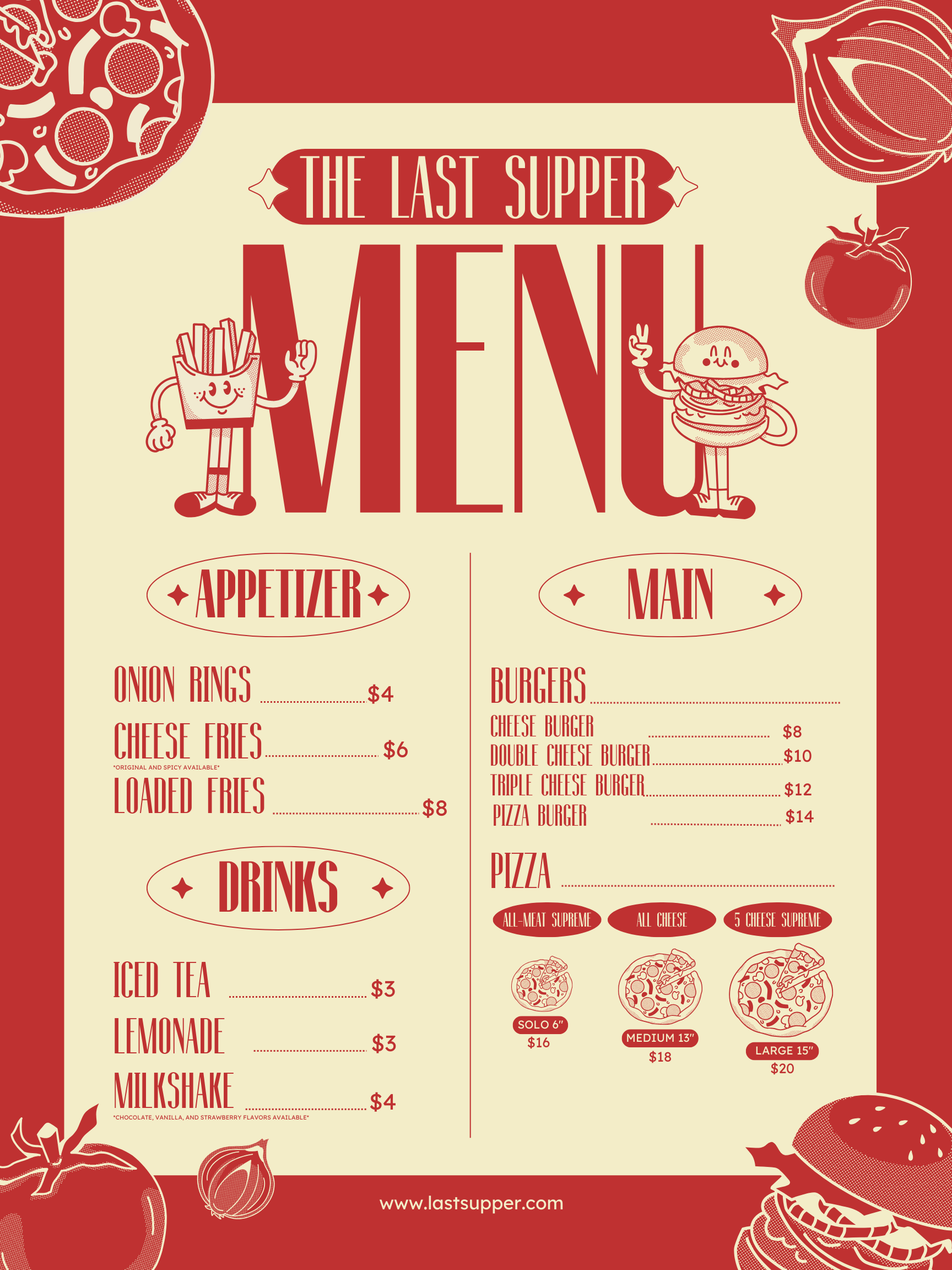
It was our last supper.

Writers on Fighters: August Wilson & Charley Burley

Writers on Fighters: August Wilson & Charley Burley
M. Abduh
3 November 2025

Many call Charley Burley the “uncrowned champion.” He was a dangerous fighter. So dangerous that several great champions (including Marcel Cerdan & the greatest pound-for-pound fighter in history, Sugar Ray Robinson) refused to face him. He belonged to a group of fighters known as “Black Murderers’ Row,” a name born of injustice & fear. They were Black men denied opportunity, men who beat opponents to death.

Burley fought from welterweight to middleweight, but he was known for knocking out heavyweights. As respected as he was in the boxing world, he never got a title shot. He never saw the big purses. So, he returned to his hometown of Pittsburgh, Pennsylvania, & worked as a garbage man.

At the time, Burley lived across the street from a boy who would become one of America’s greatest playwrights, August Wilson. Wilson went on to write an epic cycle of ten plays, each capturing a decade in the life of Black America during the twentieth century. Perhaps his most famous is Fences, set in 1957 & featuring the central character Troy Maxson. Few know that Troy Maxson was based on Charley Burley.

Wilson’s father, a European baker & a notorious drunk, was rarely around, & Burley became something of a surrogate father to him. Wilson said of Burley, “They call him the uncrowned champion. He was in Bert Sugar’s 100 Best Boxers of All Time. That’s a lot of boxers we’re talking about there. And he lived directly across the street from me, and since I grew up without a father, he was really a very strong male image for me in my life. And the fact that he went and knocked people out only added to the intrigue, the mystique of the male being conqueror.”

Professor Laurence Glasco summed up the relationship, saying that Burley was Wilson’s first idea of what it meant to be a Black man. He admired Burley because “when he walked down the street, guys looked at him with pride and awe.”

Just as Burley was denied a title shot, especially by white fighters, Troy was denied the chance to play in the major leagues. Despite their greatness, racism kept both men from rank & riches. Two men from Pittsburgh’s Hill District, both working the rubbish instead of reaching glory in their games.

Wilson captured that contradiction in Fences, the glory & the frustration of being Black in America. From the life of one of boxing’s greatest fighters, he created one of the stage’s greatest characters.

Song of the South

Song of the South
By M. Abduh

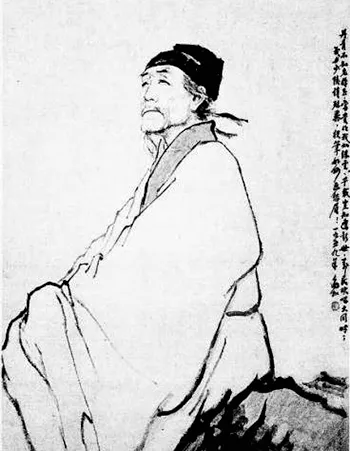
Some weeks ago, I came across One Hundred Poems from the Chinese, a volume of classic writings by Du Fu, Su Tung P’o, & others, translated & edited by Kenneth Rexroth. The collection is remarkable, but the first section—comprising thirty-five pieces by Du Fu—is most striking. The poems are imagistic, ironic, & introspective. Du Fu’s ability to describe a wine jug or the moon above his thatched roof is awe-inducing. These poems enthralled me, sending me in search of all things Du Fu.

Biographers declare him China’s greatest poet. Some even call him “China’s Shakespeare.” (I’m sure they mean it as a compliment.) However, Du Fu preceded Shakespeare by nearly eight centuries—writing around the time of Beowulf—making Shakespeare “England’s Du Fu.” & although he did not leave a traditional memoir, many of his poems are autobiographical. We find him visiting & drinking wine with Li Po, walking a wartorn countryside, & returning to his home & family after months in exile.

He wrote about the An Lushan rebellion & cold noodle soup, the horizon & a hairpin, expounding on the common and the cosmic with equal artistry. His work explores themes of isolation, loss, friendship, love, & despair while capturing the profound and simple wonders of the world:

Heartbroken, aging, alone, I sing
To myself. Ragged mist settles
In the spreading dusk. Snow skurries
In the coiling wind. The wineglass
Is spilled. The bottle is empty.
The fire has gone out in the stove.
Everywhere men speak in whispers.
I brood on the uselessness of letters.

Of course, I do not know a single character of Chinese. (That did not deter Pound, though.) So, I must acknowledge Du Fu’s translators, particularly Kenneth Rexroth. Of all the translations I consumed, his are the subtlest, the most vivid. 

I read Du Fu’s work, & I am transported—I hear the song of the South & the echo of chopping wood. I sit at a table littered with empty wine bottles & lobster shells. I lean against the temple wall in the bottomless night, as ten thousand organ pipes whistle & roar, as the war wagons rattle outside.

Writers on Fighters: Langston Hughes & Joe Louis

Writers on Fighters: Langston Hughes & Joe Louis
M. Abduh
31 August 2024

Langston Hughes wrote of the trials & triumphs of Black folks in poems such as “I, Too,” “The Weary Blues,” & “Mother to Son.” He penned essays, short stories, children’s books, novels, & plays on almost every aspect of our lives—from Harlem to Scottsboro, Alabama, from the blues to boxing. After witnessing Joe Louis’s loss to German heavyweight Max Schmeling, one of those great trials, Hughes wrote,

This was because “The Brown Bomber” was more than just a fighter to those who gathered on stoops, in barbershops, bars, & living rooms to listen to his fights on the radio. He was the pride of his people, as Hughes explained,

Louis would avenge this loss two years later, knocking out Schmeling in the opening round of their rematch. After the fight, Louis said, “If I ever do anything to disgrace my race, I hope to die.” Moved by such triumphs & testaments, Hughes wrote of Louis in a poem, “Joe has sense enough to know/He is a god/So many gods don’t know.”

Haiku of a Native Son

Haiku of a Native Son
M. Abduh

Leaving its nest
The sparrow sinks a second
Then opens its wings.

— Richard Wright, This Other World

When living abroad, Richard Wright’s book of haiku, This Other World, was a constant companion. The first thing I read in the morning, the last thing at night. Wright filled each three-line, seventeen-syllable poem with imagery & irony. His work deepened my love for the form. An ocean away from my home & family, these poems poured into me when I felt emptiest.

For Wright, creating haikus was a way to convalesce, to recuperate from a lingering illness, as his daughter Julia Wright stated,

He was never without his haiku binder under his arm. He wrote them everywhere, at all hours: in bed as he slowly recovered from a year-long, grueling battle against amebic dysentery; in cafes and restaurants where he counted syllables on napkins; in the country in a writing community owned by French friends, Le Moulin d’Ande.

Back at home among family & familiar faces, I still turn to these poems, in coffee shops & diners, by the river. Still read them often, to be filled time & again to bursting.

Fixing Fights

Fixing Fights
M. Abduh

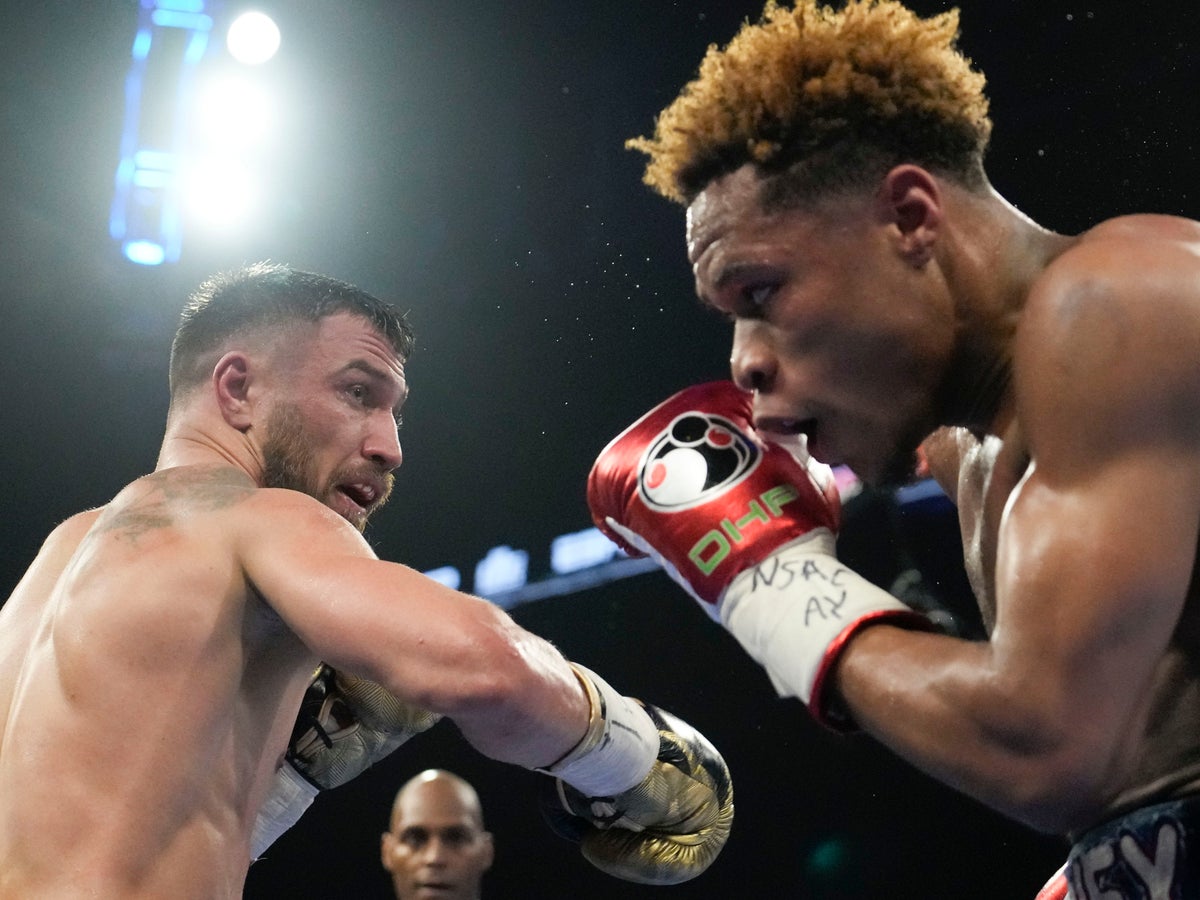
Former champions, current fighters, trainers, & analysts agree: Haney – Lomachenko was a good fight. A close fight. Some scored it for Haney by a round or two, some for Loma by a round or two. Many scored it a draw. Several rounds hinge on a few punches. That said, the decision was no robbery.

Casual fans seem unaware of the old boxing maxim: the challenger must either score a decisive victory or a knockout to take the belt. Before Chuck Hull announced the winner of the 1987 Sugar Ray Leonard – Marvelous Marvin Hagler middleweight championship fight, I said to my father, “Sugar won that.” My father tersely reminded me, “Close fight goes to the champ.” Either way, no one was robbed, not Hagler, not Lomachenko. No doubt, judge David Moretti’s score of 116-112 (eight rounds to four) caused a maelstrom. Giving Haney the 10th was abominable. Loma dominated the round. But even if Moretti rightfully gave it to him, it would still have been 115-113 for Haney. & still…a unanimous decision.

Casual fans (& apparently a few ‘hardcore’ ones) seem to know little about how rounds are scored.

“Loma was the aggressor,” they say.

There are two issues with this statement: First, it’s a half-truth. If one watches the fight closely—free of fan bias—he will see that the bout was full of ebbs & flows. At times, Loma aggressed. At times, Haney assailed. Second, simply being the aggressor does not mean a fighter wins the round. The aggression must be effective, which means a fighter lands clean, hard punches & avoids being countered. Several of Loma’s “flurries” were either blocked by Haney’s gloves or answered. Thus, most rounds were swing rounds, not beatdowns. (Even Shakur Stevenson was forced to change his fight night analysis. After reviewing the bout several times, he concluded it was much closer than he originally thought.) Judges also score points for ring generalship: the fighter’s ability to control the squared circle & impose his will & style on his opponent. Again, both Haney & Loma took turns imposing their wills—round-by-round. Likewise, judges look for hard & clean punches. “Loma was snapping Haney’s head back!” says the casual fan—while Haney was punishing Loma’s rib cage. Body punches may not be as sensational as headshots, but they can certainly be just as “hard & clean.” As the uncrowned champion Sam Langford once told Joe Louis, “Kill the body, & the head will die.”

***

Undoubtedly, boxing has judging troubles. Fight experts have forever declared this from the rooftops. But what is the solution? Boxing commentator Max Kellerman has a viable answer:       

As I mentioned at the beginning of this week, boxing has a scoring problem. I’m not talking about criteria. That’s easy enough. During each round, just ask yourself who you’d rather be. By the end of the round, you’ll know who to score it for. The problem is by how much.

Boxing is scored on what’s called the ten-point must system. The winner gets ten, & the loser always gets nine just about, unless he’s knocked down, then he’ll get eight. You almost never see a ten-eight round without a knockdown. So, you might see one fighter win a round big, & the other barely eke out the next one. Then after two rounds, the fight’s even, even though common sense tells you otherwise. Imagine a football game where one team wins the first quarter by a touchdown. The other wins the second quarter by a field goal, & somehow, they’re tied at the half as a result of that.

So how do we get to scorecards to better reflect the actual fight? Here it is. Don’t score all the rounds the same. You have ten points, right? Very close rounds are ten-nine. Decisive rounds, meaning you feel confident that one fighter or the other actually won, are ten-eight. Lopsided rounds, ten-seven. If a fighter’s knocked down, deduct two points. Knocked down twice, another two points. Touchdowns, field goals, two-point conversions, & extra points are not all scored the same, & neither should rounds in boxing be. We have ten points in the ten-point must system. Let’s use them.

Additionally, sportswriter Dan Rafael argues that judges need 

[T]raining, training, training. The key to me is that judges need to score fights on criteria that is more specific than it currently is & that fighters are also aware of what the judges are specifically looking for, so there can be no complaints. Right now, the criteria are a bit open-ended & not specific enough: ring generalship; clean, hard punching; effective aggression; defense. 

I agree with both men & have said so for years. Whatever can be done to correct the problem must be done. Posthaste. Meanwhile, not every decision is a robbery. Haney – Lomachenko, in particular, doesn’t even amount to petty larceny.  

De La Soul is Risen

De La Soul Is Risen
M. Abduh

I was lying on my cousin’s couch when the “Me, Myself, I” video came on. After telling everyone in the room to be quiet, I watched Plug One & Plug Two drop over a Funkadelic sample. Cuz’s floor model TV was old, so the picture was a menagarie of green, orange, & blue figures. But even if it had been in black & white, it was easy to see that De La Soul were originals, different than anything in hip-hop. They wore Dayglo prints and African medallions, not shoe-laceless shell tops or dookie ropes. (In fact, the video parodied that “false disguise of showbiz.”) They rapped about daisies, not Mercedes. From watching that first video to later buying every vinyl record, cassette tape, & CD they dropped, I became De La to the death (or at least until they broke up).

Death came with digital streaming. For years, I would test the waters & search “De La Soul” in the iTunes search bar. Invariably, I got results for a thousand songs with “soul” in the title or karaoke covers. But no De La. The Long Island trio was absent from streaming services because of industry rule number 4080: record company people are shady. & with the shade of the Crooked Forest, Tom Silverman, founder of Tommy Boy Records, offered the group 10% of the streaming sales. 10% split three ways. The group righteously declined the “offer.” The label left the catalog “in limbo,” as DJ Maseo said in an interview, because they didn’t deem it worth clearing all the samples. & after years of battling Tommy Boy, De La Soul finally got their catalog back, including their debut album 3 Feet High and Rising (1989), De La Soul is Dead (1991), Stakes Is High (1996), etc. It was a revelation. Fans would at last be able to stream their albums. De La Soul had risen.

Then death came again. Plug Two, David Jolicoeur, also known as Trugoy (yogurt spelled backward) died on February 12, 2023, from congestive heart failure, almost two weeks before the streaming release date. A tragic twist of fate. 

Concerning his death, group member Posdnous posted:

This made the catalog’s release bittersweet. Like every other fan, I was inconsolable at the news of Dave’s death. & like every other fan, on March 3rd at the midnight hour, I rejoiced. As I streamed single after single, album after album, I was reminded why De La Soul is the greatest hip-hop group ever. Name whomever you want: Public Enemy, Run DMC, Wu-Tang Clan, A Tribe Called Quest, NWA, Outkast, etc.

Whomever.

No one has made truer, more innovative, more soulful music. &, finally, thirty-four years after their debut album, a new generation will have their souls stirred & plug-tuned.

Mourn Your Losses

Mourn Your Losses
M. Abduh

I found Black Panther: Wakanda Forever woeful. First, for a film about the great depths, the writing is shallow, starting with King Ta’challa’s mysterious death, which unfolds in a disjointed, melodramatic mess of an opening scene and ending with an ill-conceived mid-credit reveal of a child almost no one in Wakanda has heard about, including his aunt Shuri.

I found the plot troublesome: two powerful nations of color (the only two on earth possessing vibranium) are pitted against one another while several Western states plot to destabilize them and send armed mercenaries to steal their precious resource, yet get little more than a tongue lashing on the floor of the UN. The fighting, destroying, impaling, & dying are reserved for the two darker tribes. Furthermore, Killmonger, live from the ancestral plane, is depicted as Shuri’s Black shoulder devil, while the CIA “colonizers” are the film’s comic relief.

Many critics have heaped praise on the film, perhaps out of a sense of patriotism to Wakanda, out of a sentimental attachment to the royal family. Some of these critics seem content to celebrate Black & brown faces on the silver screen, unable to point to little beyond symbolism and tokenism. That, & beautiful headdresses.           

Feet up in the theater’s semidarkness, my own shoulder devil whispered, It’s only entertainment. It’s a Disney film. It’s not meant to be political. Only it does attempt to make political statements about war, about hegemony, about the proliferation of weapons of mass destruction. Then I remembered Toni Morrison’s statement that “all good art is political. There is none that isn’t.” Well, this film isn’t…good politics or good art.  

Admittedly, the two-hour and forty-one-minute movie has its moments, particularly when a young Namor righteously kills a party of enslavers or when he drowns Queen Ramonda and tells Shuri, “Bury your dead. Mourn your losses. You are queen now.” A Shakespearean act of regicide. But these moments are few and far between, & certainly not enough to raise this wreckage to the surface world.       

As the lights went up and the credits rolled, there was a smattering of applause. A man two rows in front of me was wiping his eyes with his shirt sleeve. While some folks waited in vain for a post-credit scene, I walked out of the theater and into the lobby. Finally, a voice of reason. I overheard an older woman on her phone telling someone how the movie was “way too long” & “all over the place.”

“I’m sorry,” she said. “I would never tell someone to go see that movie. Never.” That, I thought, would have been a much better title for what I just saw: Wakanda For(n)ever.