Song of the South
By M. Abduh
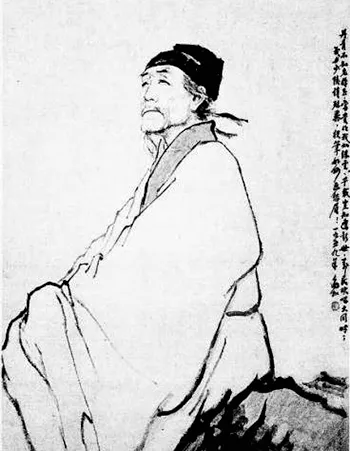
Some weeks ago, I came across One Hundred Poems from the Chinese, a volume of classic writings by Du Fu, Su Tung P’o, & others, translated & edited by Kenneth Rexroth. The collection is remarkable, but the first section—comprising thirty-five pieces by Du Fu—is most striking. The poems are imagistic, ironic, & introspective. Du Fu’s ability to describe a wine jug or the moon above his thatched roof is awe-inducing. These poems enthralled me, sending me in search of all things Du Fu.
Biographers declare him China’s greatest poet. Some even call him “China’s Shakespeare.” (I’m sure they mean it as a compliment.) However, Du Fu preceded Shakespeare by nearly eight centuries—writing around the time of Beowulf—making Shakespeare “England’s Du Fu.” & although he did not leave a traditional memoir, many of his poems are autobiographical. We find him visiting & drinking wine with Li Po, walking a wartorn countryside, & returning to his home & family after months in exile.
He wrote about the An Lushan rebellion & cold noodle soup, the horizon & a hairpin, expounding on the common and the cosmic with equal artistry. His work explores themes of isolation, loss, friendship, love, & despair while capturing the profound and simple wonders of the world:
Heartbroken, aging, alone, I sing
To myself. Ragged mist settles
In the spreading dusk. Snow skurries
In the coiling wind. The wineglass
Is spilled. The bottle is empty.
The fire has gone out in the stove.
Everywhere men speak in whispers.
I brood on the uselessness of letters.
Of course, I do not know a single character of Chinese. (That did not deter Pound, though.) So, I must acknowledge Du Fu’s translators, particularly Kenneth Rexroth. Of all the translations I consumed, his are the subtlest, the most vivid.
I read Du Fu’s work, & I am transported—I hear the song of the South & the echo of chopping wood. I sit at a table littered with empty wine bottles & lobster shells. I lean against the temple wall in the bottomless night, as ten thousand organ pipes whistle & roar, as the war wagons rattle outside.
 The Echo Tree