Keep Alive and Write
By M. Abduh
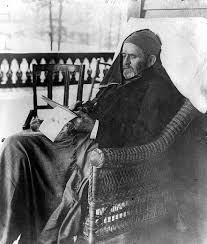
THE STORY OF The Personal Memoirs of Ulysses S. Grant serves as a reminder for the would-be writer, especially in those moments of procrastination (or outright dereliction). In the last year of his life, dying from throat & tongue cancer & in need of “cocaine water” just to swallow, Grant worked every day, some days writing up to 10,000 words. He knew his fate, yet resolved himself to complete the work before his demise, and finished just days before dying. The result was a 336,000-word manuscript of “flawless” prose left in the hands of his friend & publisher, Mark Twain. When Pulitzer Prize-winning author & Grant biographer Ron Chernow went to examine the nine volume manuscript—bound in blue leather—at the Library of Congress, he found it written in the general’s “own hand, starting with the clear, flowing penmanship of the early months down to the cramped, slanted fragments of the later period when pain and narcotics fogged his mind.” Chernow writes that many consider Grant’s work “the foremost military memoir in the English language, written in a clear supple style that transcends the torment of its composition.” So, the story of this memoir reminds the writer to go to the blank page or screen, in the morning or evening, with a sense of urgency, to “find a way to keep alive,” as Baldwin says, “and write.”
 The Echo Tree